
Termite Swarm Confirmed In the golden isles
March 2026 Pest Update: Termite Swarms Already Confirmed in Coastal Georgia
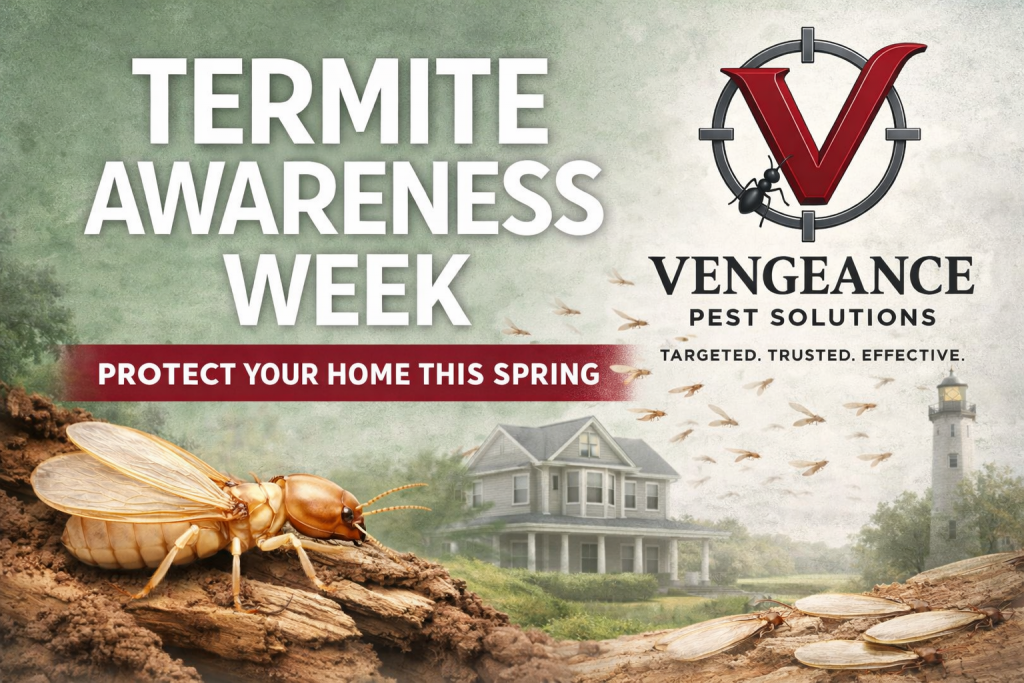
Recognizing Termite Awareness Week
This week is Termite Awareness Week, an annual reminder for homeowners to learn how to recognize termite activity and protect their homes from one of the most destructive pests in the United States. The timing is fitting for Coastal Georgia, because termite activity has already begun this spring.
Over the past week, confirmed termite swarms have already been reported on St. Simons Island and in Waynesville, Georgia. While termite swarms are a normal seasonal event, seeing them this early is a sign that colonies are already active in our area.
Termites are responsible for an estimated $5 billion in property damage each year in the United States, and most homeowner insurance policies do not cover termite damage. That’s why awareness and early detection are so important for homeowners in our region.
(Source: National Pest Management Association)
What Is a Termite Swarm?
A termite swarm occurs when mature termite colonies release winged reproductive termites called alates. These swarmers leave the colony in large numbers to mate and start new colonies. Swarms often appear suddenly and may last only a short time, usually on warm days following rain.
Seeing swarmers does not always mean termites are inside your home, but it does indicate that a mature colony is nearby. In Coastal Georgia, the most common species are subterranean termites, which live in the soil and build mud tubes to travel between their colony and food sources.
Signs to Watch For
During spring, homeowners may notice several signs of termite activity:
- Flying termites around windows, doors, or light fixtures
- Discarded wings that resemble small fish scales
- Mud tubes along foundations or crawlspace supports
- Wood that sounds hollow or appears damaged
Many people confuse termite swarmers with flying ants. A quick way to tell the difference is by looking at their shape. Termites have straight antennae, equal-length wings, and thicker bodies, while flying ants have elbowed antennae, uneven wings, and a narrow waist.
Why We’re Seeing Swarms Now
In Georgia, subterranean termites typically swarm between late February and May, depending on weather conditions. Warm winter temperatures followed by early spring rains can trigger swarms earlier in the season.
Coastal communities like St. Simons Island often see termite activity first because of the warmer coastal climate and the moisture conditions termites prefer.
What Homeowners Can Do
Termite Awareness Week is a good opportunity to check around your home and look for conditions that may attract termites. Simple preventative steps can help reduce risk, including:
- Keeping mulch and soil from contacting wooden structures
- Reducing moisture around the foundation
- Maintaining crawlspace vapor barriers
- Fixing plumbing leaks promptly
- Having structures inspected periodically
A Seasonal Reminder
Termite swarms are one of the earliest signs that spring pest season has begun in Coastal Georgia. While seeing swarmers can be alarming, they are primarily a signal that termites are active in the surrounding environment.
As the season continues, additional swarms are expected throughout Glynn, Camden, McIntosh, and Brantley counties. Staying aware of the signs of termite activity can help homeowners catch problems early and avoid costly damage.
Termite Awareness Week is simply a good reminder to take a closer look around your home and stay informed about the pests that share our coastal environment.
National Pest Management Association has an in depth article about termites this Spring if you would like to Learn More.