
Why Roaches Get Worse in July in Coastal Georgia
And What to Do About It
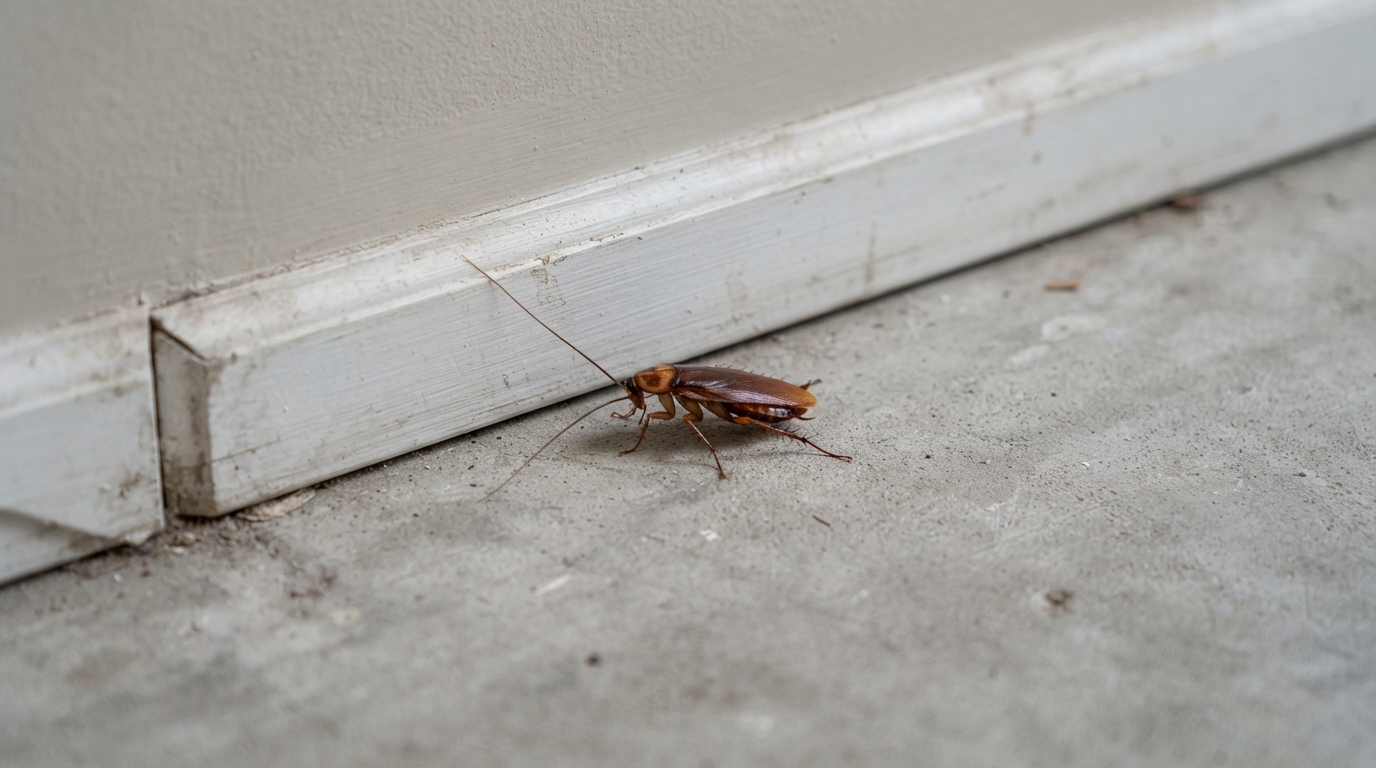
If you've noticed more roach activity in your home this month, you're not imagining it. July is consistently one of the busiest months of the year for roach complaints across Brunswick, Saint Simons Island, Kingsland, St. Marys, Darien, and the surrounding Coastal Georgia communities we serve.
There are real biological and environmental reasons for that — and understanding them helps you make smarter decisions about how to respond.
Quick Answers (Key Takeaways)
- Why are roaches worse in July? Coastal Georgia's extreme heat, high humidity, and frequent afternoon thunderstorms create ideal breeding and displacement conditions.
- What's the difference in where they live? German roaches breed indoors (kitchens, bathrooms), while American roaches (palmetto bugs) live outdoors and come inside to escape weather.
- Why do store-bought sprays fail? They only repel or kill visible roaches, pushing the rest deeper into hiding without addressing the root cause or nest.
- What should I do? Stop spraying, look for moisture issues, check entry points, and get a professional inspection to identify the species.
Coastal Georgia's Summer Climate Is Ideal for Roach Activity
Let's start with what's actually happening outside your home right now.
Coastal Georgia in July means heat that doesn't let up, relative humidity that regularly pushes above 70 percent, and afternoon thunderstorms that saturate the ground multiple times a week. For humans, it's uncomfortable. For roaches, it's nearly perfect.
Two species drive the majority of roach complaints we handle in Glynn, Camden, McIntosh, and Brantley Counties during the summer months. They are very different insects, they behave differently, and they need to be handled differently. Knowing which one you're dealing with is the first step toward actually solving the problem.
The German Cockroach: The Indoor Pest That Breeds Fast
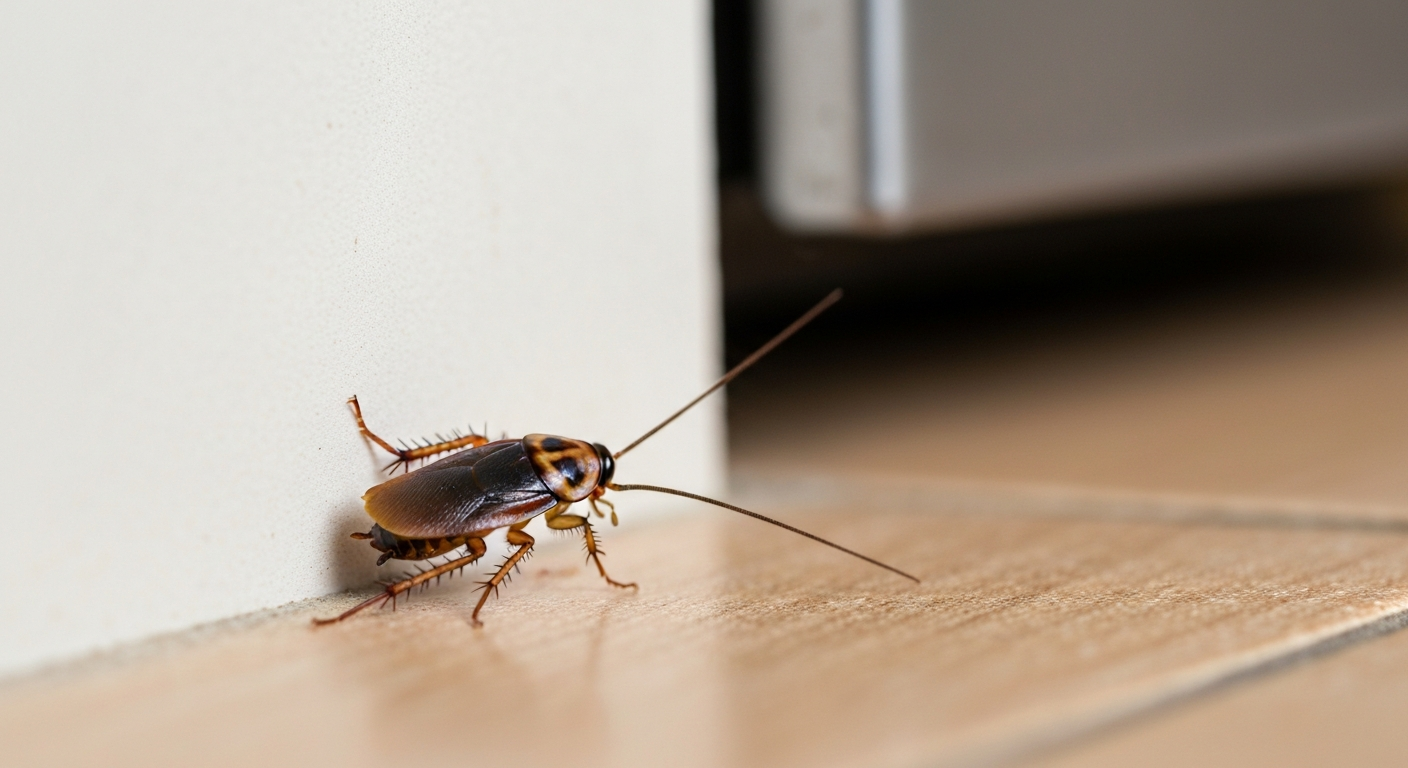
The German cockroach (Blattella germanica) is small — roughly half an inch long — tan-colored, with two dark stripes running lengthwise behind its head. It is almost exclusively an indoor pest. It does not wander in from the yard or the marsh like a lot of people assume. It arrives inside your home on something — a grocery bag, a cardboard delivery box, a piece of used furniture or appliance — and once it's in, it stays in.
What makes the German cockroach the more serious of the two species from a homeowner's perspective is how fast it reproduces. A female German cockroach produces an egg case called an ootheca that holds 30 to 40 eggs. She carries it until just before hatching, then deposits it in a protected, hard-to-reach location — behind an appliance, inside a wall void, under a cabinet hinge. When those eggs hatch, the cycle repeats almost immediately.
In Coastal Georgia's summer heat and humidity, the German cockroach's development cycle accelerates. What takes longer in cooler months happens faster in July. A small, undetected population can become a visible, widespread problem relatively quickly — which is one reason homeowners are often surprised by how fast the situation changes.
German cockroaches concentrate in kitchens and bathrooms because those spaces offer what they need: warmth, moisture, and food residue. Specifically, they are found:
- Behind and beneath the refrigerator — the motor housing generates heat and the space offers darkness and protection
- Behind and beneath the stove — grease accumulation and warmth
- Under the sink — especially if there is any pipe leak or moisture buildup
- Inside wall voids near the dishwasher drain
- Behind the microwave and other countertop appliances
- Inside cardboard boxes or paper bags stored in pantries or laundry areas
This matters for treatment because if you don't treat where they actually are, you're not treating the problem. You're treating what you can see, which is usually a fraction of the actual population.
The American Cockroach: The Large Outdoor Pest That Moves Inside
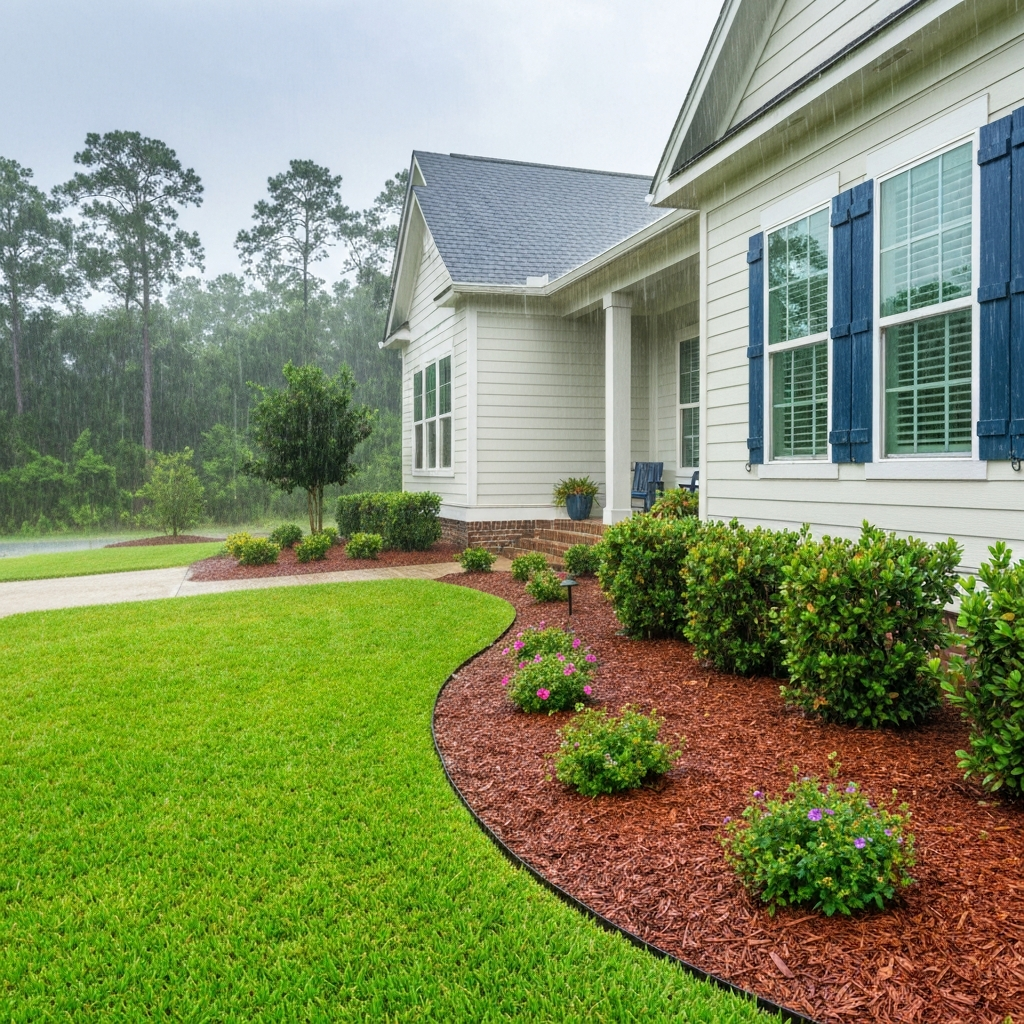
The American cockroach (Periplaneta americana) is a different story entirely. It's the large one — reddish-brown, up to two inches long, with a yellowish marking on its head that looks vaguely like a figure-eight. Many Coastal Georgia homeowners know it by the regional nickname "palmetto bug," though American cockroach is the correct name.
Unlike the German cockroach, the American cockroach is not an indoor insect by nature. It lives in the landscape — in mulch beds, storm drains, leaf litter beneath decks, utility voids, and beneath concrete slabs. It thrives outdoors in the warmth.
So why is it showing up inside your home in July?
Not Sure Which Roach You're Dealing With?
Snap a pic and submit it for a FREE ID — we'll tell you what it is and what to do next.
Two reasons, both tied directly to the season.
First, rain events. When Coastal Georgia gets a heavy afternoon storm — the kind that dumps two inches of rain in ninety minutes — the ground saturates quickly. American cockroaches living in mulch beds, drains, and soil voids get displaced. They move toward higher, drier ground. If your home has gaps at the foundation, worn door sweeps, open floor drains, or gaps around utility pipe penetrations, they come inside.
Second, extreme heat. When surface temperatures climb and outdoor conditions become inhospitable even for insects that prefer warmth, American cockroaches seek the temperature-regulated environment inside a structure. Again, they enter through the same specific points.
The important distinction: American cockroaches are not nesting in your kitchen the way German cockroaches are. They do not have the same breeding dynamic indoors. They are opportunistic invaders, not established indoor colonizers. But that doesn't make them harmless to ignore — they signal that your home's exterior has gaps that need to be identified and addressed, and regular indoor activity is not something to simply accept as a feature of coastal living.
Why Store-Bought Sprays Don't Solve Either Problem
This is where most homeowners get stuck in a cycle of frustration.
Over-the-counter insect sprays are formulated for consumer use. Most of them are contact or repellent-based products. When a roach encounters the treated surface, it moves — often deeper into harborage areas where it's harder to reach. For German cockroaches already nesting behind appliances and inside wall voids, a repellent spray doesn't reach the colony. It doesn't touch the egg cases. Two to three weeks later, a new generation hatches and you're back where you started.
For American cockroaches, spraying around the baseboards inside your home treats the symptom — the ones already inside — while doing nothing about the entry points that will bring in more tomorrow night.
Professional treatment approaches these problems differently. The inspection identifies what species is present, where they're concentrated, and what conditions are sustaining the activity. Treatment is then applied where it will actually work — not where it's visible or convenient.
What to Do If You're Seeing Roach Activity This Month
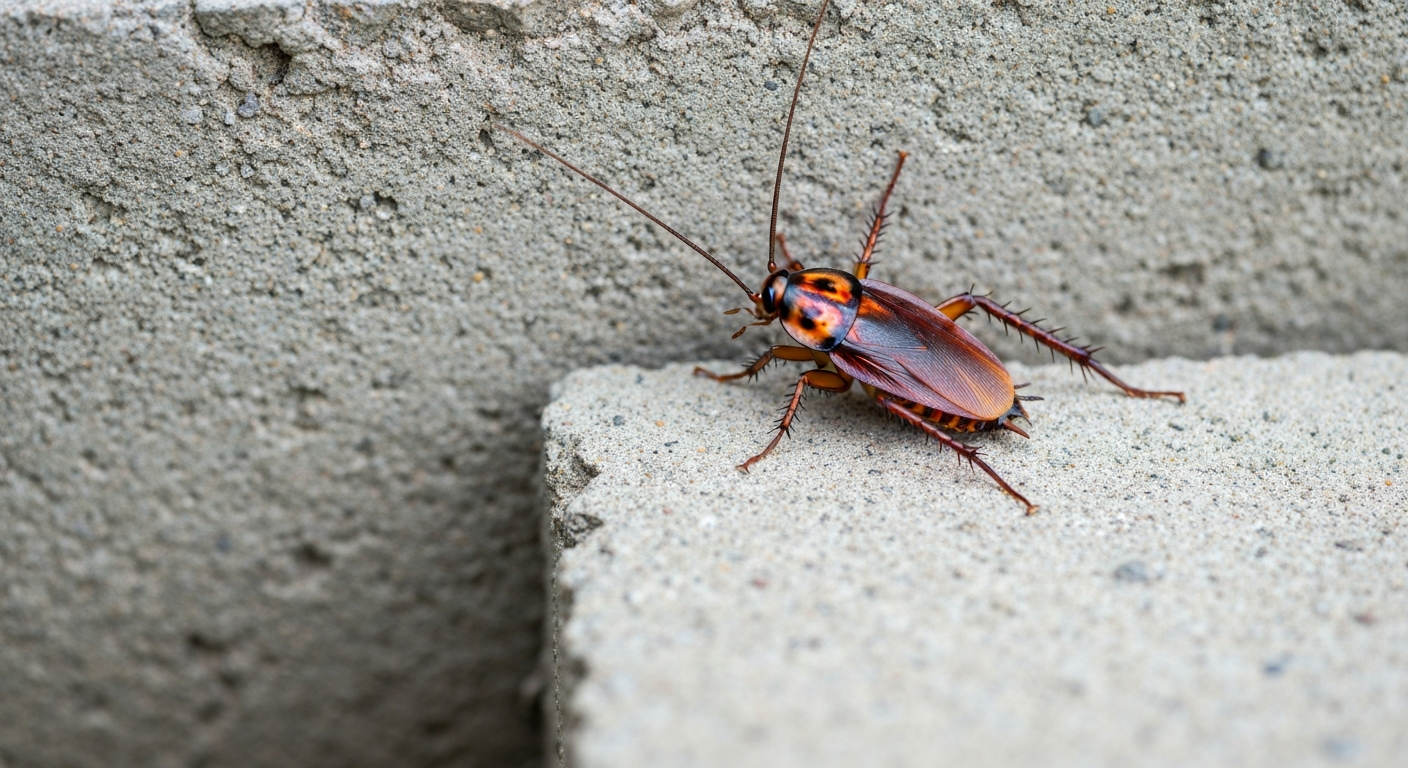
If you're seeing roaches in your home right now — in the kitchen, bathrooms, or coming in through floor areas at night — here's a practical framework:
- Don't spray and wait. It won't resolve the underlying issue and may scatter German cockroaches deeper into harborage areas, making them harder to treat.
- Look for moisture first. Check under sinks for any dripping or standing water. Check the floor area around the refrigerator and dishwasher. German cockroaches are strongly attracted to moisture.
- Check your entry points. Look at the door sweeps on exterior doors — if you can see daylight underneath, American cockroaches can get through. Check floor drains in the garage or utility areas.
- Identify the species if you can. A small tan roach with dark stripes is a German cockroach and requires indoor treatment focused on nesting areas. A large reddish-brown roach is an American cockroach and requires exterior perimeter management and entry point assessment.
- Call for a professional inspection. Until you know the species, the scale, the entry points, and the conducive conditions — you're guessing. A trained technician can answer all of those questions in a single visit.
Vengeance® ADVANCED Roach Defense
Vengeance Pest Solutions serves homeowners across Coastal Georgia with Vengeance® ADVANCED Roach Defense — a targeted, inspection-first roach control program designed specifically for the pest pressures this region experiences. We also provide comprehensive Vengeance® Pest Defense for year-round protection.
Every service starts with a thorough inspection. We identify the species, locate nesting and harborage areas, map entry points, and assess the conditions contributing to the problem. Treatment is then applied where it needs to go — not as a generic spray around the perimeter.
We serve Brunswick, Saint Simons Island, Jekyll Island, Sea Island, Kingsland, St. Marys, Darien, and surrounding communities throughout Glynn, Camden, McIntosh, and Brantley Counties. See our Service Areas for more details.
The inspection is free. No pressure. No generic package. Just a real look at what's happening in your home and an honest recommendation.
Vengeance Pest Solutions | Targeted. Trusted. Effective. | Locally owned and operated in Coastal Georgia.