
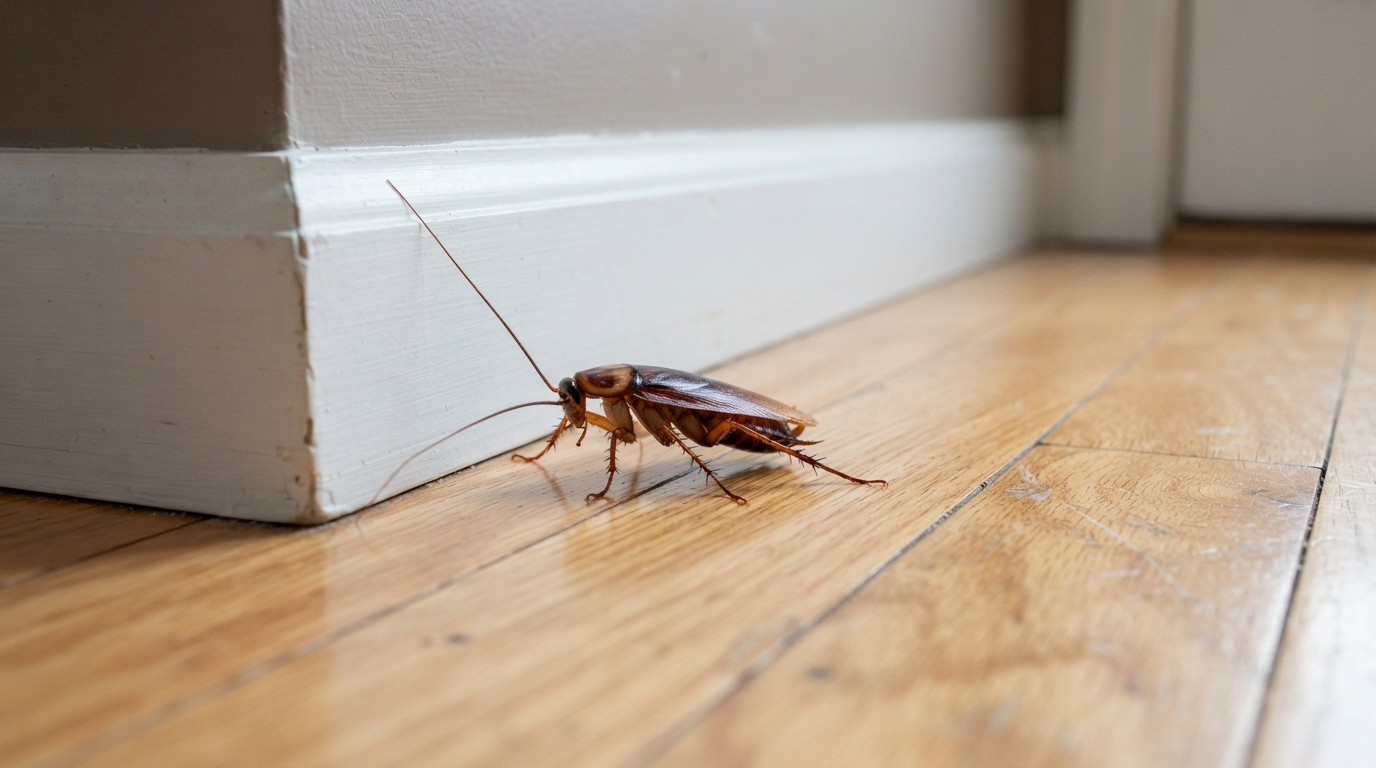
American Cockroach (Palmetto Bug)
Periplaneta americana
Often called 'palmetto bugs' in Coastal Georgia, American cockroaches are large, reddish-brown pests that primarily live outdoors but come inside looking for shelter and moisture.
The American cockroach (Periplaneta americana) is the largest common house-infesting cockroach in North America. In Coastal Georgia, they're known by a more familiar name: palmetto bugs. While the name is different, the insect is the same — a large, reddish-brown cockroach that can fly.
Unlike German cockroaches, which live almost entirely indoors, American cockroaches primarily live outdoors in mulch, tree holes, sewer systems, and landscape beds. They enter homes through gaps, drains, utility penetrations, and foundation cracks when outdoor conditions become harsh or when indoor conditions are attractive.
Understanding the difference between American and German cockroaches matters because they require different treatment approaches. A strategy designed for indoor German roaches won't effectively address outdoor American cockroach pressure — and vice versa.
How to Identify American Cockroaches
American cockroaches are large, reddish-brown insects with a distinctive yellowish figure-eight pattern on the back of their head. They are significantly larger than German cockroaches and have fully developed wings.
- Adults range from 3.5 to 5 cm (1.4 to 2 inches) in length
- Reddish-brown coloration with a yellowish band behind the head
- Both males and females have wings and can fly short distances, especially in warm weather
- Larger and more robust than German cockroaches
- Nymphs are wingless and grayish-brown
Behavior and Habitat
American cockroaches are primarily outdoor insects that prefer warm, damp, dark environments. They enter homes through plumbing, drains, gaps around pipes, and foundation cracks — often at night when foraging for food and water.
- Often found in mulch, leaf litter, tree holes, sewer systems, and landscape beds
- Enter homes through drains, plumbing penetrations, gaps around pipes, and foundation cracks
- Prefer warm, moist areas — basements, crawlspaces, laundry rooms, and near water heaters
- Can fly short distances, especially during warm, humid evenings
- Active at night; during the day they hide in dark, undisturbed areas
Signs of American Cockroach Activity
Because American cockroaches often live outdoors and enter homes through entry points, signs of activity may appear both inside and outside the home.
- Large reddish-brown roaches seen in sinks, bathtubs, or near drains — they often enter through plumbing
- Droppings that are larger than German roach droppings, sometimes mistaken for mouse droppings
- Egg capsules (oothecae) glued to surfaces in dark, hidden areas
- A musty odor in areas where they congregate
Where You'll Find Them
American cockroaches primarily live outdoors but enter homes through specific entry points. Knowing where they harbor helps you understand how they're getting in.
Health and Property Risks
While American cockroaches are less likely to establish indoor infestations than German roaches, they still pose meaningful risks when they enter homes.
- Contaminate food and surfaces with bacteria from sewers and decaying matter
- Trigger allergic reactions in sensitive individuals — especially their shed skins and droppings
- Can spread pathogens including Salmonella and other foodborne illnesses
- Startling encounters — their large size and ability to fly cause distress, especially at night
- Indicator of moisture or entry-point problems that need to be addressed
When to Call a Professional
Occasional palmetto bugs are common in Coastal Georgia, but certain patterns indicate a problem worth addressing professionally.
- You're seeing them regularly indoors — more than one or two per month
- They're appearing in multiple rooms or multiple levels of the home
- You find them in sinks, tubs, or near drains repeatedly
- You've noticed a musty odor in crawlspaces or basements
- DIY sprays and baits aren't reducing the frequency of sightings
Why Coastal Georgia Makes It Worse
Coastal Georgia's warm, humid climate provides ideal conditions for American cockroaches year-round. Our abundant trees, mulch beds, and proximity to marshes and waterways create prime outdoor habitat. In neighborhoods throughout Brunswick, St. Simons Island, and the Golden Isles, mature landscaping and older homes with utility penetrations give palmetto bugs easy access indoors — especially during heavy rain or extreme heat.
Dealing with american cockroach (palmetto bug) in your home?
Schedule a free, no-obligation inspection. We'll identify what's there and build a targeted plan.
What Homeowners Can Do
Because American cockroaches primarily live outdoors, prevention focuses on reducing outdoor harborage and sealing entry points into the home.
- Seal gaps around pipes, utility lines, and foundation cracks with caulk or expanding foam
- Keep door sweeps in good condition and maintain weatherstripping
- Reduce mulch depth near the foundation and keep vegetation trimmed back
- Ensure drains have proper covers and that plumbing penetrations are sealed
- Address moisture issues in crawlspaces and basements
Frequently Asked Questions
Ready to Get Vengeance on american cockroach (palmetto bug)?
Our licensed technicians will inspect your property, identify the problem, and build a targeted treatment plan — at no cost to you.