
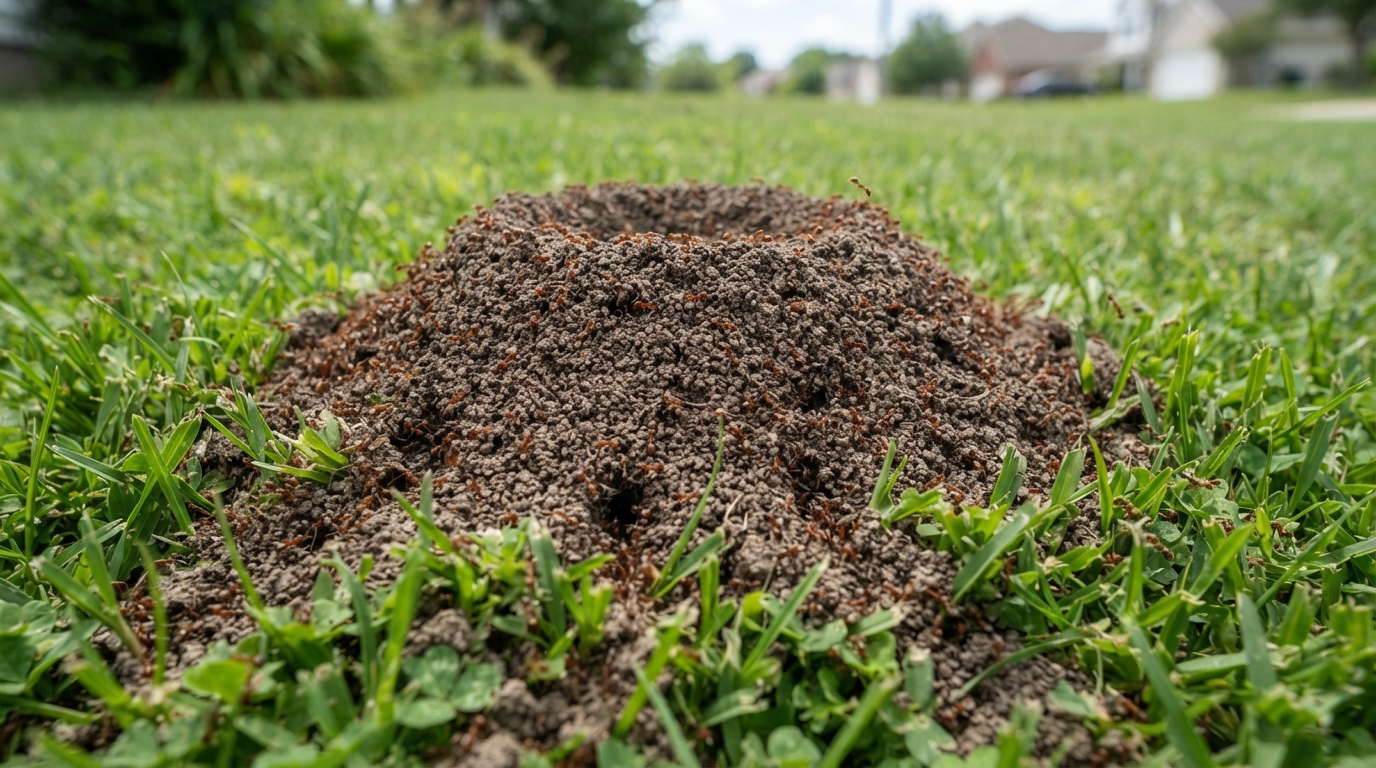
Red Imported Fire Ants
Solenopsis invicta
Fire ants are aggressive, venomous ants known for their painful stings and large mound-building colonies in yards across the Southeast.
Red imported fire ants (Solenopsis invicta) are one of the most aggressive and disruptive pests in Coastal Georgia yards. Originally from South America, they've become established throughout the Southeast and are now a year-round problem for homeowners in Brunswick, St. Simons Island, and surrounding communities.
Fire ants build distinctive mound nests in open, sunny areas — lawns, pastures, and along sidewalks. When a mound is disturbed, the ants respond aggressively and in large numbers, delivering painful stings that can cause serious reactions in sensitive individuals.
Fire ant colonies can be difficult to eliminate with DIY methods. Mounds that appear to be gone often reappear nearby as the colony simply relocates. Professional treatment targets both the visible mound and the colony below ground for more reliable, long-lasting results.
How to Identify Fire Ants
Fire ants are small, reddish-brown to dark brown ants. Their mounds are the most visible sign of their presence — raised, dome-shaped soil structures that appear in lawns and open areas.
- Workers range from 3 to 6 mm (1/8 to 1/4 inch) in length
- Reddish-brown to dark brown coloration — darker on the abdomen
- Mounds are dome-shaped, 6-18 inches across, and made of loose, fluffy soil with no visible entrance hole
- Mounds often appear after rain when ants bring soil to the surface
- When disturbed, ants swarm aggressively out of the mound and sting
Behavior and Habitat
Fire ants are highly social insects that live in large colonies. They're aggressive defenders of their territory and are known for their painful, coordinated sting response when their mound is disturbed.
- A single colony can contain 100,000 to 500,000 ants
- Colonies can have multiple queens, making elimination more difficult
- Prefer open, sunny areas — lawns, pastures, parks, and along sidewalks
- Mounds can extend several feet below ground
- Active year-round in Coastal Georgia's warm climate — most visible after rain
Signs of Fire Ant Activity
Fire ant mounds are the most obvious sign, but there are other indicators of fire ant activity in your yard.
- Raised, dome-shaped mounds in the lawn — especially visible after rain
- Aggressive swarming response when a mound is disturbed
- Visible ant trails leading to and from the mound
- Dead patches of grass near mound sites
- Ants entering and exiting around the base of the mound
Where You'll Find Them
Fire ants prefer open, sunny areas with loose soil. In residential settings, they're most commonly found in specific parts of the yard.
Health and Property Risks
Fire ants are one of the most medically significant yard pests in the Southeast. Their aggressive sting response makes them dangerous to people, pets, and wildlife.
- Painful stings — each ant can sting multiple times, and colonies attack in swarms
- Allergic reactions — stings can cause anaphylaxis in sensitive individuals, which is life-threatening
- Danger to children and pets — those who can't move away quickly are most at risk
- Nest site hazards — mounds can damage lawns, electrical equipment, and even pave areas
- Infested yards become unusable — limiting outdoor play, gardening, and pet access
When to Call a Professional
Fire ants don't go away on their own, and DIY treatments often just relocate the colony. These are signs it's time for professional treatment.
- You've found mounds in your yard — even one mound indicates a colony nearby
- Children or pets use the yard regularly and are at risk of stings
- You've tried DIY treatments and mounds keep reappearing in new locations
- Mounds are near walkways, play areas, or where people gather
- You manage multiple mounds across a larger property or landscape
Why Coastal Georgia Makes It Worse
Coastal Georgia's warm, humid climate allows fire ants to remain active for most of the year. Our sandy soil is ideal for mound construction, and our frequent rainfall encourages ants to build new mounds or relocate existing ones. Lawns throughout Brunswick, St. Simons Island, Kingsland, and surrounding areas provide the open, sunny habitat fire ants prefer. In this climate, fire ant treatment is an ongoing need rather than a one-time fix.
Dealing with red imported fire ants in your home?
Schedule a free, no-obligation inspection. We'll identify what's there and build a targeted plan.
What Homeowners Can Do
Fire ant prevention is challenging because new colonies can move in from neighboring properties. These steps help reduce the risk, but professional treatment is the most reliable approach.
- Avoid disturbing mounds — this can cause the colony to relocate rather than be eliminated
- Keep lawns well-maintained to reduce favorable nesting conditions
- Watch for new mounds after rain, when fire ants are most active at rebuilding
- Don't attempt DIY mound treatments that only kill surface ants — the queen and colony below must be reached
- Schedule professional yard treatment for reliable, season-long protection
Frequently Asked Questions
Ready to Get Vengeance on red imported fire ants?
Our licensed technicians will inspect your property, identify the problem, and build a targeted treatment plan — at no cost to you.