
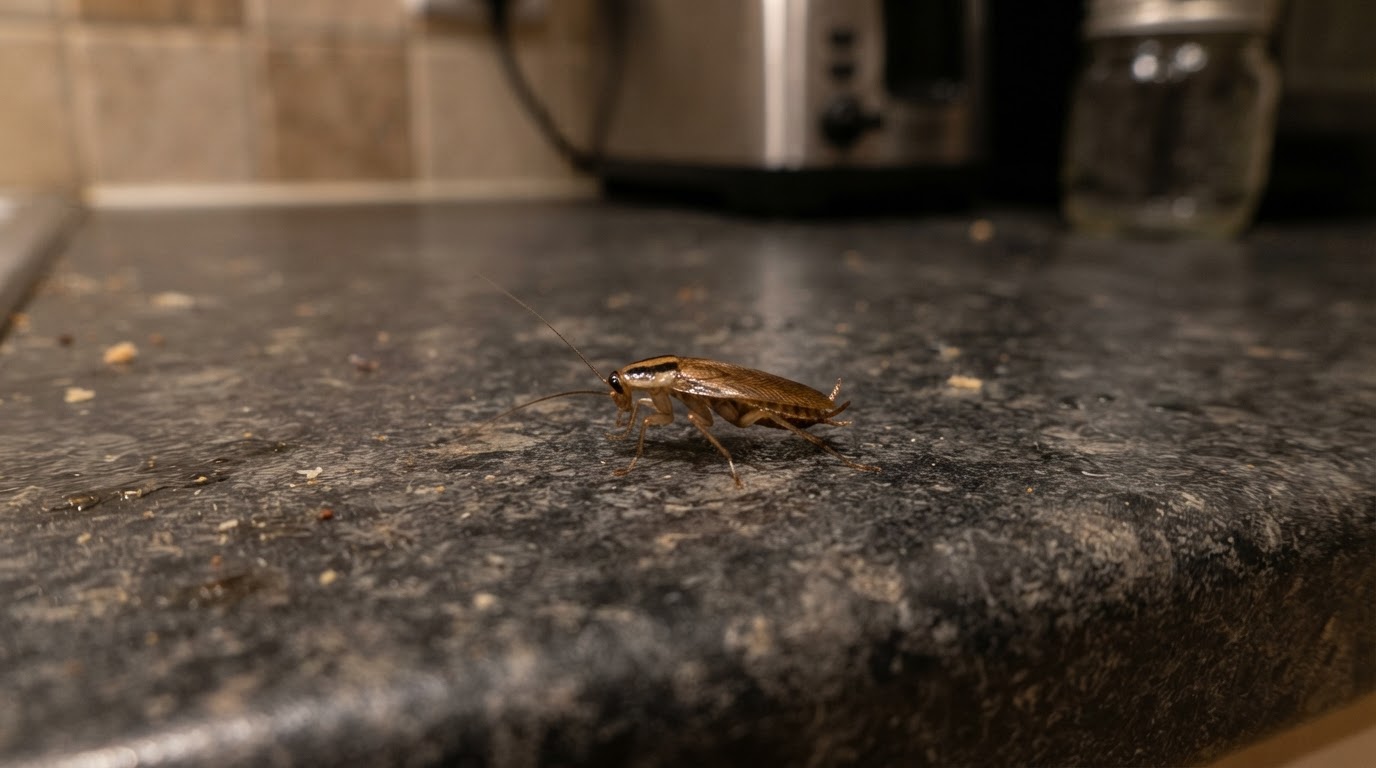
German Cockroach
Blattella germanica
The German cockroach is a small species of cockroach, typically about 1.1 to 1.6 cm long. They are a major indoor pest, especially in kitchens and bathrooms.
The German cockroach (Blattella germanica) is the most common and persistent cockroach species found in Coastal Georgia homes. Unlike outdoor species like American or smokybrown cockroaches, German roaches live almost entirely indoors — which means once they're established in your home, they don't leave on their own.
They're also one of the fastest-reproducing cockroach species. A single female can produce multiple egg capsules (oothecae) during her lifetime, each containing 30 to 40 eggs. In a warm, humid environment like Coastal Georgia, a small problem can grow into a significant infestation in a matter of weeks.
German cockroaches don't respond reliably to store-bought sprays. Professional treatment that targets nesting areas, interrupts the breeding cycle, and addresses the conditions supporting the population is the most effective path to long-term control.
How to Identify German Cockroaches
German cockroaches are small, light brown to tan insects with two distinctive dark parallel stripes running lengthwise behind their head. They are significantly smaller than the American cockroaches (palmetto bugs) commonly seen in Coastal Georgia.
- Adults range from 1.1 to 1.6 cm (about half an inch) in length
- Light brown to tan coloration with two dark stripes on the pronotum (behind the head)
- Wings are present but they rarely fly — they prefer to run
- Nymphs are darker and wingless, often seen near adults
- Egg capsules (oothecae) are light brown, about 7-9 mm long
Behavior and Habitat
German cockroaches are nocturnal and prefer warm, humid environments close to food and water. They're almost always found indoors, which is what makes them so persistent. They hide in cracks and crevices during the day and emerge at night to feed.
- Primarily found in kitchens and bathrooms — near sinks, dishwashers, stoves, and refrigerators
- Often hide in cabinet hinges, drawer slides, behind appliances, and in wall voids
- Prefer temperatures between 75-85°F with high humidity
- Omnivorous — they eat food scraps, grease, starches, glue, soap, and even each other in severe infestations
- Can survive up to a week without water but only a few days without food
Signs of a German Cockroach Infestation
German cockroaches are elusive by nature, but they leave behind several detectable signs. Catching an infestation early makes treatment significantly more effective.
- Live roaches seen during the day — a sign of a significant population, as they normally only come out at night
- Small, dark droppings that resemble ground pepper or coffee grounds, often found in cabinet drawers and under appliances
- Egg capsules (oothecae) glued to surfaces in hidden areas
- Shed skins from molting nymphs
- A faint, musty or oily odor that becomes more noticeable in larger infestations
Where You'll Find Them
German cockroaches are almost exclusively indoor pests. They gravitate toward areas that provide warmth, moisture, and food — which in most homes means a few key rooms.
Health and Property Risks
German cockroaches are more than a nuisance — they pose real health risks, especially in homes with children, elderly residents, or anyone with respiratory conditions.
- Trigger allergies and asthma — cockroach allergens are a leading cause of indoor allergy symptoms
- Spread bacteria — including E. coli, Salmonella, and other pathogens picked up from garbage and sewage
- Contaminate food and food-prep surfaces with droppings, shed skins, and saliva
- Rapid population growth — a small infestation can become severe in weeks without intervention
- Psychological stress — living with an infestation takes a real toll on families
When to Call a Professional
German cockroaches rarely resolve on their own. The earlier you act, the more effective treatment is. These are clear signs it's time to call.
- You've seen live roaches during the day — a strong indicator of a significant population
- You notice droppings, shed skins, or a musty odor in kitchens or bathrooms
- Store-bought sprays haven't produced lasting results after 2-3 weeks
- You've recently brought in used furniture, appliances, or boxes that may have carried them in
- Neighbors in your building or adjacent unit have reported roach activity
Why Coastal Georgia Makes It Worse
Coastal Georgia's warm, humid climate is ideal for German cockroaches. Our homes maintain the temperatures and humidity levels they prefer year-round — which means there's no natural seasonal slowdown. Kitchens, bathrooms, and utility areas in Brunswick, St. Simons Island, and surrounding communities provide the warmth, moisture, and food sources German roaches need to sustain a population through every month of the year.
Dealing with german cockroach in your home?
Schedule a free, no-obligation inspection. We'll identify what's there and build a targeted plan.
What Homeowners Can Do
These habits support professional treatment and help extend results between visits. They're not a replacement for professional service — they're your part of the partnership.
- Eliminate food and water access — keep counters clean, don't leave dirty dishes overnight, store food in sealed containers
- Reduce moisture under sinks, near dishwashers, and around water heaters
- Seal cracks and crevices around cabinets, baseboards, and utility penetrations
- Eliminate clutter, especially in kitchens, bathrooms, and storage areas
- Stay consistent with professional inspections to catch early signs before they grow
Frequently Asked Questions
Ready to Get Vengeance on german cockroach?
Our licensed technicians will inspect your property, identify the problem, and build a targeted treatment plan — at no cost to you.