
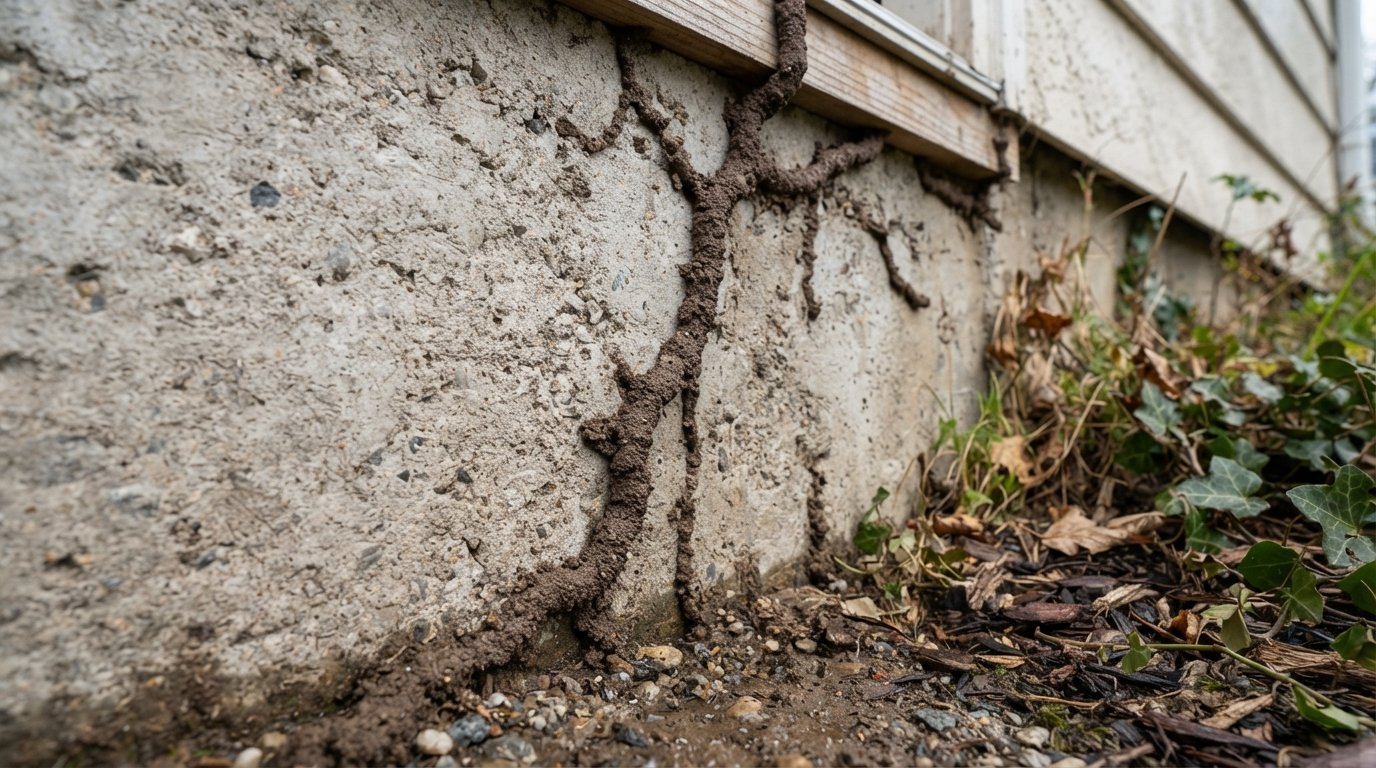
Subterranean Termites
Rhinotermitidae
Subterranean termites live in the soil and build mud tubes to access wood above ground. They cause millions in property damage every year in Coastal Georgia.
Subterranean termites are the most destructive wood-destroying insect in Coastal Georgia. They live in colonies in the soil and build distinctive mud tubes to travel between their underground nests and wood sources above ground. Unlike drywood termites, they require contact with soil to survive.
A mature colony can contain hundreds of thousands to over a million termites, and they feed on wood 24 hours a day, 7 days a week. In Coastal Georgia's warm, humid climate, termite activity is a year-round threat — not a seasonal one. The combination of sandy soil, high moisture, and abundant wood-to-soil contact in older homes creates ideal conditions for colony establishment.
Termite damage is rarely covered by homeowners insurance, which makes prevention and early detection critical. Professional monitoring and baiting systems offer the most reliable long-term protection.
How to Identify Subterranean Termites
Subterranean termites are small, soft-bodied insects that are rarely seen directly. Most homeowners first notice the signs of their activity — mud tubes, damaged wood, or swarming — rather than the insects themselves.
- Worker termites are about 6 mm long, creamy-white, and wingless
- Soldier termites have enlarged orange-brown heads with large mandibles
- Reproductives (swarmers) are dark brown to black with two pairs of equal-length wings
- Mud tubes are the most visible sign — pencil-width brown tubes on foundation walls, crawlspaces, or exterior walls
- Damaged wood may sound hollow when tapped and may have soil packed inside the galleries
Behavior and Habitat
Subterranean termites live in underground colonies and maintain contact with the soil for moisture. They build mud tubes to travel between their colony and above-ground food sources, protecting themselves from drying out and from predators.
- Colonies can contain 60,000 to over 1 million individual termites
- Workers feed on cellulose in wood, paper, cardboard, and other plant materials
- Build mud tubes (shelter tubes) to travel above ground while maintaining moisture contact
- Swarms typically occur in spring and early summer in Coastal Georgia — often after rain
- Can enter homes through cracks as small as 1/32 of an inch
Signs of Termite Activity
Termites are often called 'silent destroyers' because they can cause significant damage before being detected. Knowing what to look for can help you catch activity early.
- Mud tubes on foundation walls, crawlspaces, or exterior walls
- Discarded wings near windowsills or doors — left behind after swarming
- Wood that sounds hollow when tapped or feels soft and spongy
- Bubbling or peeling paint that resembles water damage
- Frass (termite droppings) that resembles small wood-colored pellets near infested wood
- Swarms of winged insects emerging from the ground or from wood in or around your home
Where You'll Find Them
Subterranean termites build their colonies in the soil and travel to wood sources above ground. In Coastal Georgia homes, they target specific areas where wood meets moisture.
Health and Property Risks
Subterranean termites don't pose direct health risks to people, but the structural and financial damage they cause is among the most severe of any pest.
- Structural damage — termites can compromise load-bearing wood, floors, and framing
- Costly repairs — termite damage is typically not covered by homeowners insurance
- Hidden progression — damage accumulates for months or years before detection
- Reduced property value — termite history can affect resale and buyer confidence
- Selling complications — WIIR inspections may reveal active or past termite activity
When to Call a Professional
Termite activity is not something to monitor and wait on. If you suspect termites, a professional inspection should happen promptly.
- You see mud tubes on your foundation, crawlspace walls, or piers
- You find discarded termite wings near windows, doors, or light fixtures
- Wood in your home sounds hollow when tapped or feels soft and spongy
- You witness a termite swarm — winged insects emerging inside or near your home
- It's been more than a year since your last professional termite inspection
- You're buying or selling a home and need a WIIR termite inspection
Why Coastal Georgia Makes It Worse
Coastal Georgia is one of the highest termite-pressure regions in the country. Our warm climate, high humidity, sandy soil, and abundant rainfall create ideal conditions for subterranean termite colonies to thrive year-round. Older homes throughout Brunswick, St. Simons Island, and surrounding areas often have wood-to-soil contact, settling foundations, and moisture pockets that make them especially vulnerable. The Georgia Department of Agriculture recommends ongoing professional termite protection for homes in this region.
Dealing with subterranean termites in your home?
Schedule a free, no-obligation inspection. We'll identify what's there and build a targeted plan.
What Homeowners Can Do
While professional monitoring and treatment is the most reliable protection, these habits help reduce conditions that attract termites to your property.
- Eliminate wood-to-soil contact around the foundation — maintain at least a 6-inch gap
- Keep firewood stored at least 20 feet away from the home and elevated off the ground
- Reduce moisture around the foundation — direct downspouts away and address drainage issues
- Keep mulch at least 6 inches away from the foundation and no more than 2 inches deep
- Schedule annual professional termite inspections and maintain active monitoring
Frequently Asked Questions
Ready to Get Vengeance on subterranean termites?
Our licensed technicians will inspect your property, identify the problem, and build a targeted treatment plan — at no cost to you.