
American Cockroaches in Coastal Georgia
What Homeowners Need to Know
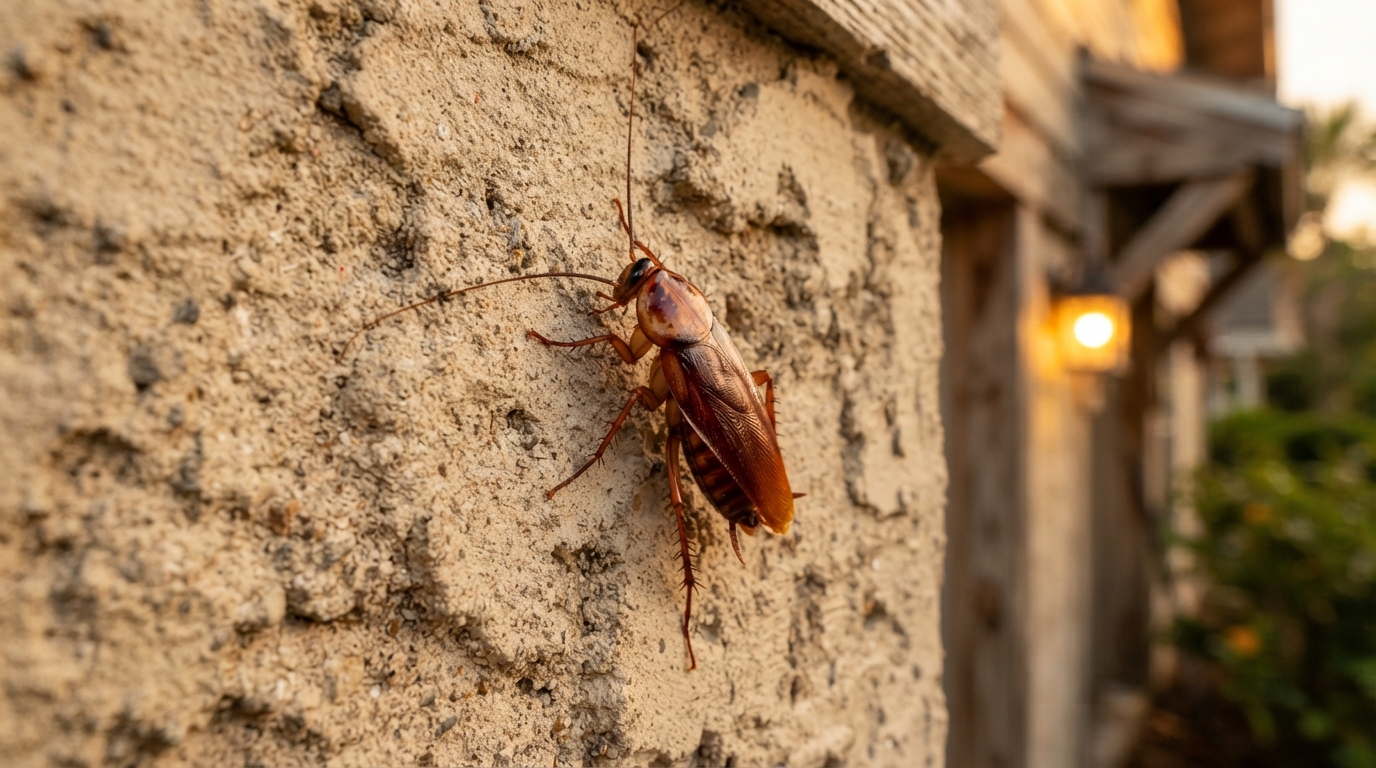
If you've been finding large, reddish-brown roaches in your home this summer — near the bathroom drain, crossing the kitchen floor at night, or along a baseboard near an exterior door — there's a good chance you're dealing with the American cockroach.
Most Coastal Georgia homeowners know this pest by a different name. "Palmetto bug" is the regional term that's been used for generations. But the correct name is the American cockroach (Periplaneta americana), and knowing what it actually is — and how it actually behaves — is the key to understanding why it keeps showing up and what you can do about it.
This article is written for homeowners in Brunswick, Saint Simons Island, Jekyll Island, Kingsland, St. Marys, Darien, and the surrounding communities who deal with this pest regularly and want straightforward answers.
Quick Answers (Key Takeaways)
- What are palmetto bugs? In Coastal Georgia, "palmetto bugs" are actually American cockroaches.
- Why are they inside my house? They usually move indoors due to extreme heat or heavy summer rains displacing them from their outdoor habitats.
- Where do they come from? They live outdoors in mulch, storm drains, and leaf litter. They enter through gaps in doors, floor drains, and utility pipes.
- How do I get rid of them? Effective control requires sealing entry points and treating the exterior perimeter, rather than just spraying indoors.
What Is the American Cockroach?
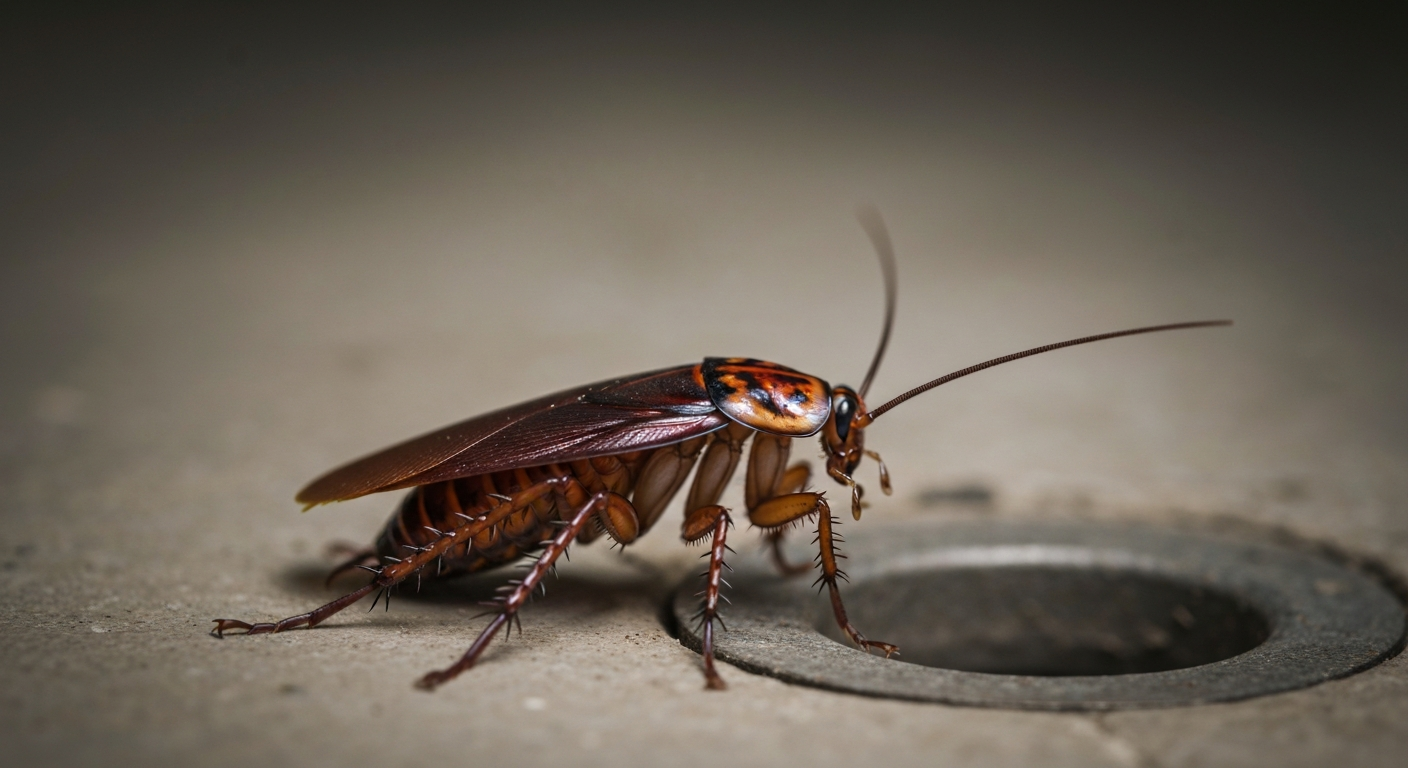
The American cockroach is the largest cockroach species commonly found in Coastal Georgia homes. Adults typically reach 1.5 to 2 inches in length. They are reddish-brown in color with a distinctive yellowish, figure-eight-shaped marking on the top of their head — a reliable identification feature once you know to look for it. They move fast when disturbed, which contributes to the startling impression they make when they appear unexpectedly.
Despite the name, the American cockroach is not native to North America. It originated in Africa and was introduced to the Americas through the shipping trade centuries ago. It has since become one of the most widespread insect species in warm, humid regions worldwide.
In Coastal Georgia, it thrives. The warm climate, high humidity, abundant outdoor vegetation, and the presence of stormwater infrastructure — drains, culverts, and storm sewers — all provide ideal habitat for this species. July and August are the peak months for American cockroach activity, driven by the specific weather conditions that characterize this region in high summer.
The American Cockroach Is an Outdoor Insect — So Why Is It Inside Your Home?
This is the question that matters most for homeowners.
The American cockroach is not, in its natural behavior, an indoor pest in the way German cockroaches are. It doesn't seek out your kitchen because of food. It doesn't nest behind your appliances or breed in your wall voids the way German cockroaches do. It is fundamentally an outdoor species — living in mulch beds, storm drains, leaf litter, beneath concrete slabs, in utility voids, and in tree cavities.
It moves indoors for one of two reasons, and both are directly tied to what's happening in Coastal Georgia right now.
Reason 1: Rain displacement.
Coastal Georgia summers bring frequent and often heavy afternoon thunderstorms. When significant rainfall saturates the ground quickly — which it often does given the sandy, coastal soil profile — American cockroaches living in the landscape get displaced from their outdoor harborage. They move toward higher, drier ground. If your home sits in their path and has accessible entry points, they come in.
This is why homeowners often notice a spike in American cockroach activity inside their homes during or immediately after rain events. It's not coincidence. It's displacement behavior.
Reason 2: Extreme heat.
When surface temperatures climb to the extremes that Coastal Georgia summers regularly produce, the outdoor environment becomes inhospitable even for heat-tolerant species. American cockroaches seek the temperature moderation that a structure provides. Again, they enter through specific points in the building envelope.
The critical takeaway: American cockroach activity inside your home is almost always an entry point problem, not a sanitation problem. Your home doesn't need to be dirty for American cockroaches to come in. It just needs to have gaps they can use.
How Are They Getting In? The Most Common Entry Points
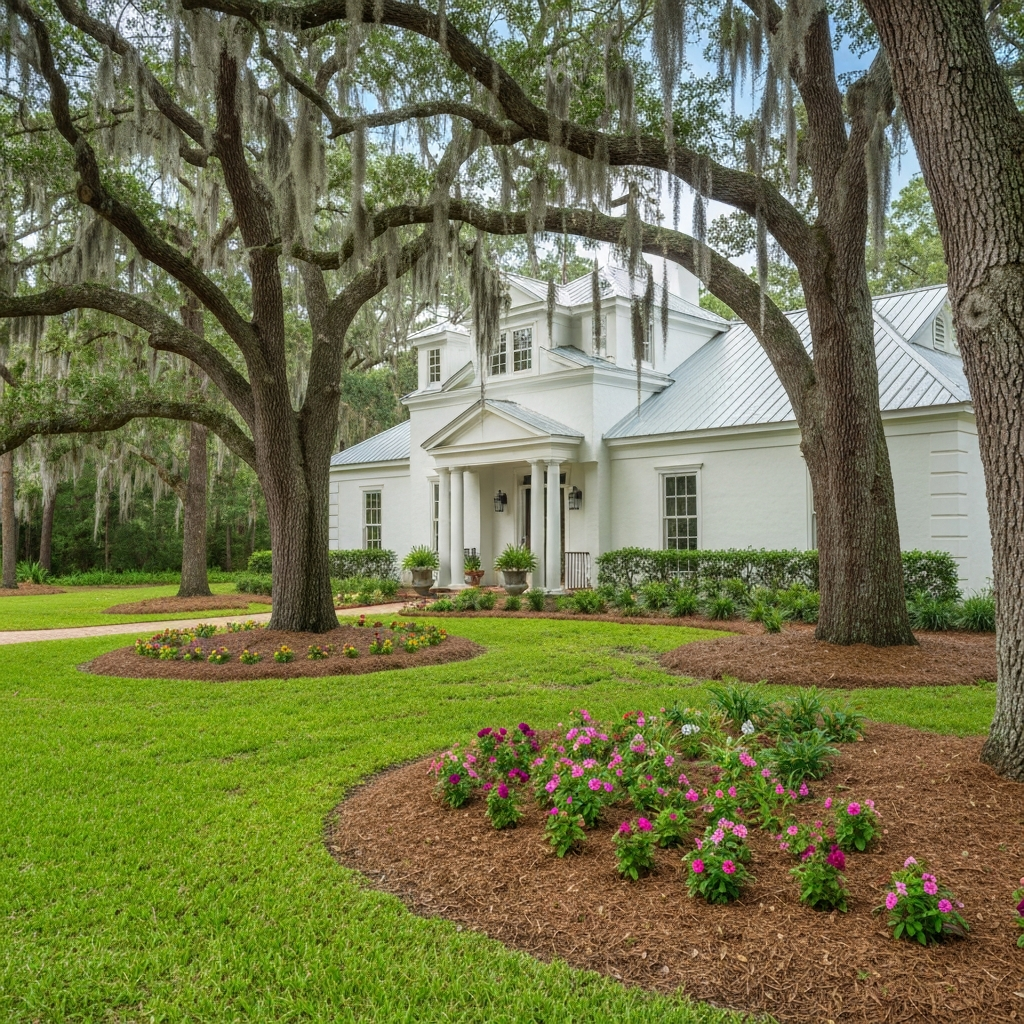
When we inspect homes across Coastal Georgia for American cockroach activity, we consistently find the same categories of entry points. These are worth knowing whether you're working with a pest control professional or doing a preliminary self-assessment.
Need Professional Pest Control?
Don't let pests take over your Coastal Georgia home. Get a customized treatment plan today.
- Door sweeps. The rubber or brush seal along the bottom of an exterior door degrades over time with UV exposure and regular use. A gap as small as a quarter-inch — enough to see daylight beneath the door — is enough for an American cockroach to squeeze through. This is one of the most common and most overlooked entry points in residential properties.
- Floor drains. Garage floor drains, basement drains, and floor drains in older bathrooms connect to the storm sewer system where American cockroaches are abundant. Without a functioning trap or cover, these are direct pathways from the outdoor storm drain network into your home.
- Utility pipe penetrations. Anywhere a water supply line, drain line, electrical conduit, or gas line passes through the foundation or exterior wall, there is typically a gap between the pipe and the surrounding material. These gaps are often small and easy to overlook, but American cockroaches navigate them readily.
- Foundation cracks and gaps. Particularly in older Coastal Georgia homes — which may have block or brick foundations with decades of settling — cracks at the base of the foundation provide direct entry. Crawlspace homes are especially vulnerable, since the crawlspace provides a connected pathway from the outdoor landscape to the interior floor structure.
- Crawlspace vents. Crawlspace perimeter vents — particularly older ones with degraded or missing screens — are open invitations. American cockroaches in the landscape surrounding the home move into the crawlspace readily, and from there into the living space through gaps in the floor structure.
American Cockroaches vs. German Cockroaches: Why the Difference Matters for Treatment
Homeowners dealing with roach activity often don't know which species they're dealing with — and the distinction changes the treatment approach significantly.
Here's a quick way to tell them apart in the field:
| Feature | German Cockroach | American Cockroach |
|---|---|---|
| Size | Small — about ½ inch | Large — 1.5 to 2 inches |
| Color | Tan/light brown | Reddish-brown |
| Markings | Two dark stripes behind head | Yellowish figure-eight on head |
| Where found | Kitchen, bathroom — near appliances and plumbing | Near floor drains, exterior doors, garage |
| Origin | Introduced on something brought inside | Came in from outside |
| Indoor breeding | Yes — aggressive | Rarely |
For American cockroaches, effective control focuses on the exterior: - Identifying and sealing entry points - Managing exterior perimeter pressure — mulch beds, drain areas, landscape adjacent to the foundation - Treating the outdoor environment where the population is living and breeding
For German cockroaches, effective control focuses on the interior: - Locating harborage areas behind and beneath appliances - Targeted treatment in nesting locations - Interrupting the breeding cycle with professional-grade products
Treating one like the other accomplishes very little. See our German Roaches vs. Palmetto Bugs guide for more details.
Practical Prevention Steps Homeowners Can Take
There are several things you can do on your own that genuinely reduce American cockroach pressure, regardless of whether you're working with a pest control professional.
- Replace worn door sweeps. This is one of the highest-return improvements a homeowner can make for reducing American cockroach entry. If you can see daylight under an exterior door, replace the sweep. These are inexpensive and available at any hardware store.
- Address floor drains. Make sure floor drains in the garage and utility areas have functioning drain traps and fitted covers where appropriate. A drain that's open to the storm sewer without a water trap seal is a direct entry point.
- Pull mulch back from the foundation. Mulch beds installed directly against the foundation slab or wall provide both harborage and a highway directly to your entry points. Pulling mulch back at least a foot from the structure — and reducing its depth where it contacts the foundation — reduces the outdoor population immediately adjacent to your home.
- Check and seal utility penetrations. Walk the exterior of your home and look at every place a pipe or conduit enters through the foundation or exterior wall. Even small gaps can be temporarily addressed with steel wool and foam filler until a more permanent repair is made.
- Manage exterior lighting. American cockroaches are attracted to light. Switching exterior fixtures to yellow-spectrum or LED bulbs reduces the attractant effect near doorways and entry points, which reduces how many roaches are active in the immediate vicinity of your entries at night.
These steps reduce pressure. They don't replace a professional inspection for properties with consistent indoor activity — but they are meaningful, practical starting points.
When You Need Specialized Services:
American cockroaches appearing inside your home once or twice during heavy rain events — particularly if you have known entry points that haven't been addressed — is relatively common in Coastal Georgia and often manageable with the prevention measures above along with regular maintenance pest control service.
American cockroaches appearing regularly inside your home, appearing in rooms far from exterior entry points, or appearing in significant numbers is a different situation. It tells us there are entry points we haven't found, that exterior pressure is higher than average, or that there's a connected pathway from the outdoor environment — such as a plumbing system — that needs to be assessed.
A professional inspection identifies all of these factors: the entry points, the exterior pressure, the conducive conditions, and what specifically needs to change to reduce interior activity. That inspection is where a real solution starts.
Vengeance® ADVANCED Roach Defense
Vengeance Pest Solutions addresses both American cockroach and German cockroach activity through Vengeance® ADVANCED Roach Defense — a program built on inspection first, not assumptions. We identify what species is present, how they're getting in, what's sustaining the pressure, and what treatment approach is right for your specific property. We also provide comprehensive Vengeance® Pest Defense and Vengeance® TOTAL Defense for year-round protection.
We serve homeowners throughout Coastal Georgia — Brunswick, Saint Simons Island, Jekyll Island, Sea Island, Kingsland, St. Marys, Darien, and surrounding communities in Glynn, Camden, McIntosh, and Brantley Counties.
The inspection is free. No guessing. No generic spray. A real look at what's happening — and an honest plan for what to do about it. Learn more about Why Roaches Get Worse in July.
📞 Call or text: 912-268-3150 🌐 Schedule your free inspection: getvengeancepest.com
Vengeance Pest Solutions | Targeted. Trusted. Effective. | Locally owned and operated in Coastal Georgia.