
Termite Swarm Season Is Here
What Brunswick Homeowners Should Watch For
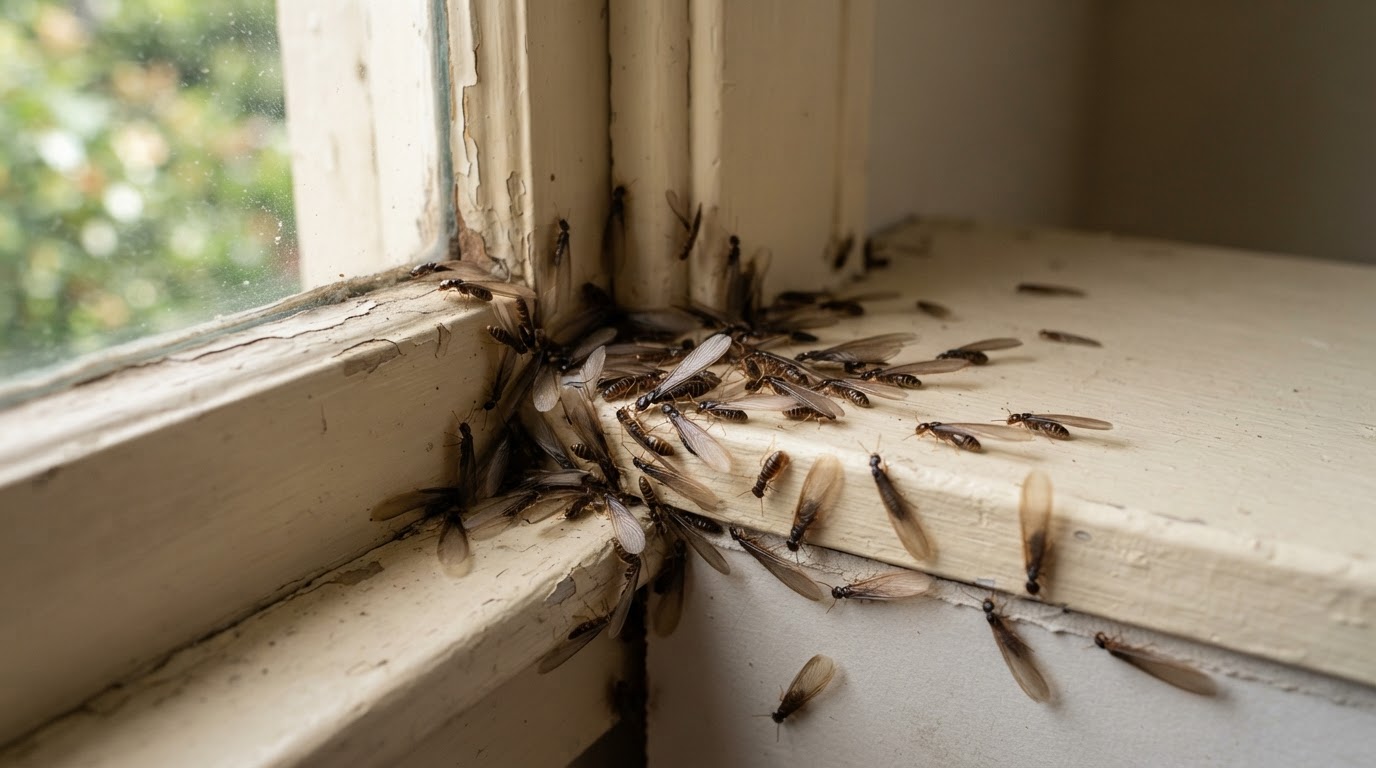
If you've lived in Coastal Georgia for more than a summer or two, you've probably heard that termite swarms happen in spring. That's true for one of the termite species common here — but it's not the whole picture, and it's part of why our phone starts ringing with termite calls again every September.
Georgia sits inside what pest control professionals call the "termite belt." Our mild temperatures and steady rainfall create close to ideal conditions for termites year-round, and that's especially true in established neighborhoods where mature landscaping, aging foundations, and years of settling give termites easy entry points and moisture to work with. In Brunswick, that describes a lot of the neighborhoods we love most — Marshes of Mackay, Belle Point, Northwood Estates, Highland Park — older, established, and full of exactly the conditions termites look for.
Quick Answers (Key Takeaways)
- Do termites swarm in the fall? Yes. While the Eastern subterranean termite swarms in spring, the light southeastern subterranean termite — common in our area — swarms July through September.
- What does a fall swarm mean? Swarms come from mature, established colonies. A fall swarm at your home signals a colony that's been developing for a while, not something that appeared overnight.
- What are the top signs to watch for? Winged swarmers indoors, discarded wings on windowsills, mud tubes along the foundation, and knowing how to tell termites apart from flying ants.
- When should I call? If you see swarmers, find discarded wings, or spot mud tubes — especially in an older home that hasn't been inspected recently — schedule a professional inspection right away.
Why September, Specifically
The termite species most people picture swarming — the Eastern subterranean termite — typically swarms February through April, which is why spring gets most of the termite-awareness attention. But the light southeastern subterranean termite, which is common throughout our part of the state, swarms on a different calendar: typically July through September. That's a second, distinct swarm window, and it's the reason we see a real uptick in fall termite calls here in Coastal Georgia even though the spring swarm already happened months ago.
Swarming happens mainly when outdoor temperatures are warm, and usually only from mature, established colonies — meaning a fall swarm at your home is a sign of a colony that's been developing for a while, not something that showed up overnight. The winged termites you'd see swarming (called alates) actually start developing months earlier: colonies begin producing large numbers of nymphs in late summer, and those nymphs molt several times over the following months to grow wings, eyes, and functional reproductive organs before they ever take flight.
You can learn more about the species themselves in our subterranean termite pest guide.
---
Not sure if you're seeing termites or flying ants?
A photo is usually all we need to tell you what you're dealing with — and whether it's worth worrying about.
Book a Free Inspection — or call 912-268-3150
---
What to Actually Watch For
Most homeowners never see a termite crawling on a wall — infestations usually go unnoticed until someone sees an actual swarm or comes across damage during a renovation or repair. Here's what tends to give it away before it gets to that point:
Swarmers. These are winged termites, and if you see a cluster of them — especially indoors, near a window or light source — that's often one of the first real signs of an infestation inside the structure itself, not just termite activity somewhere out in the yard.
Discarded wings. After swarmers mate, they shed their wings. A small pile of wings on a windowsill or along a baseboard is a classic sign, even if you never saw the swarm itself.
Need Professional Pest Control?
Don't let pests take over your Coastal Georgia home. Get a customized treatment plan today.
Termites vs. flying ants. It's easy to mistake one for the other, but there are two reliable differences: termite wings are roughly equal in length front to back, and their antennae are straight (they may droop slightly). Flying ants have front wings noticeably longer than their back wings, and their antennae are bent at a sharp angle. If you're not sure which one you're looking at, a photo is usually enough for us to tell you.
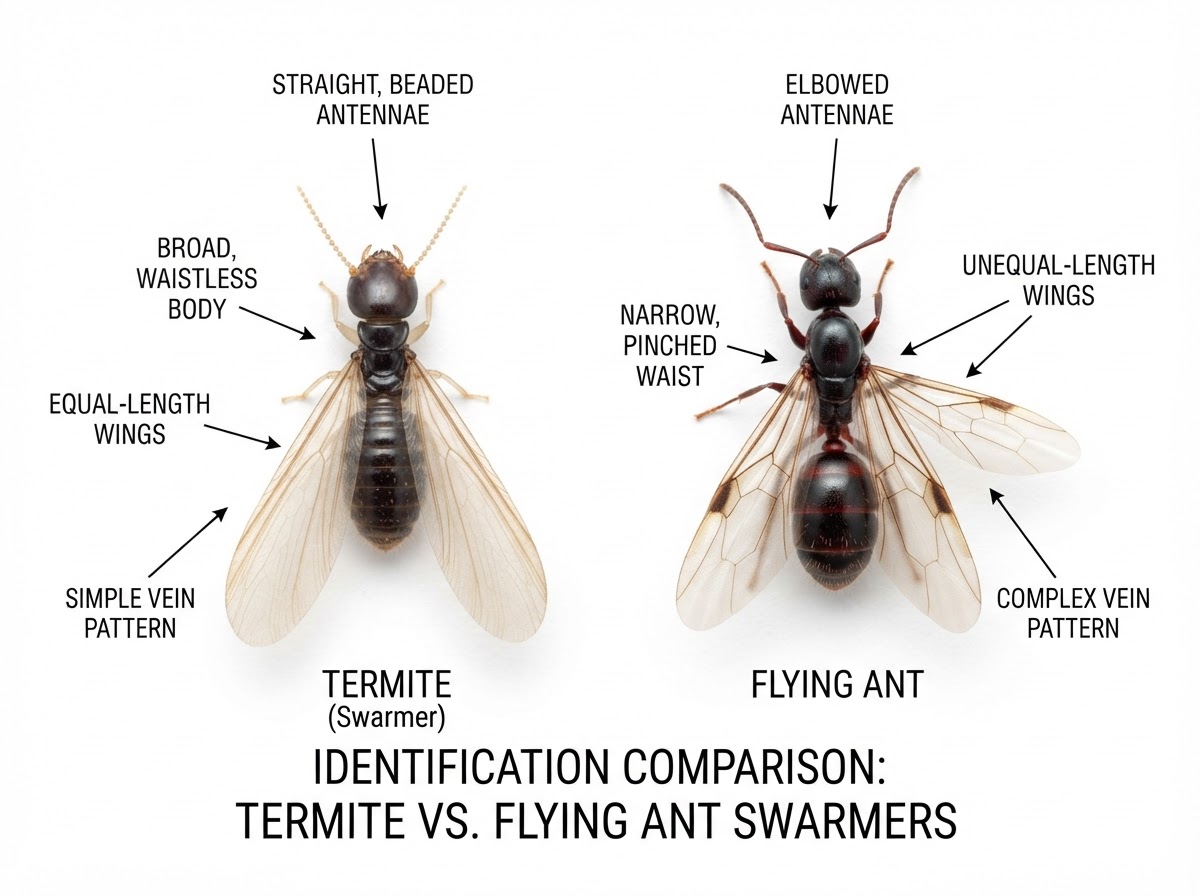
| Feature | Termite Swarmer | Flying Ant |
|---|---|---|
| Wings | All four roughly equal length | Front wings noticeably longer than back |
| Antennae | Straight (may droop slightly) | Bent at a sharp angle |
| Waist | Broad, uniform thickness | Pinched/narrow waist |
| What it means | Possible structural infestation | Usually just foraging outdoors |
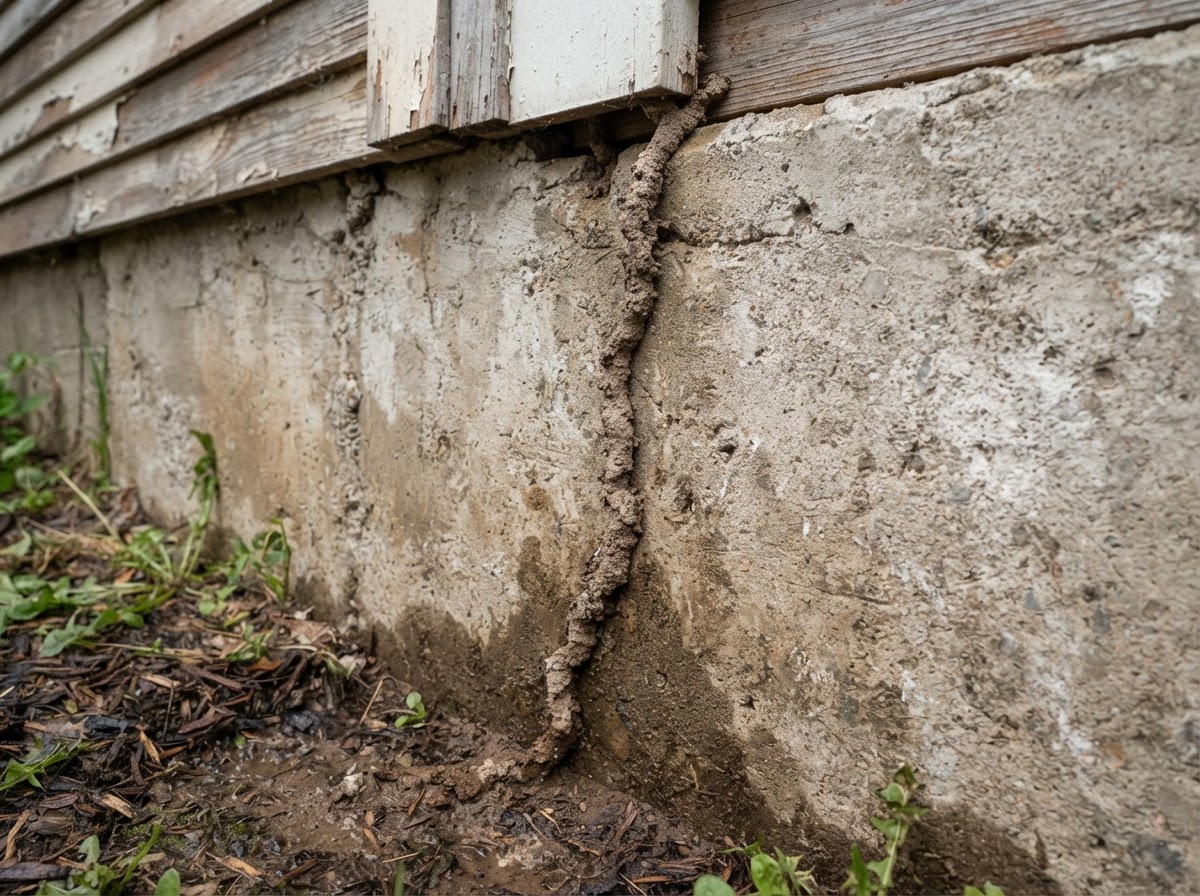
Mud tubes. Subterranean termites build narrow, hollow tubes out of soil and their own saliva to travel between the ground and wood sources while staying protected from predators and from drying out. Finding these along a foundation wall, a crawlspace pier, or anywhere soil meets a wood structure is worth a closer look, whether or not you've seen a swarm.
Why Older Brunswick Homes Are Worth a Closer Look
Homes with wood-to-soil contact, aging foundations, or mature trees and landscaping close to the structure carry more risk — and that describes a lot of Brunswick's most established neighborhoods. None of that means an older home has a problem. It just means it's worth having eyes on it, especially if it's been a while since the last inspection or if there's no real service history to speak of.
If you're preparing to buy or sell, this is also when the Official Georgia Wood Infestation Inspection Report (WIIR) — often called a termite letter — comes into play. A fall swarm can surface an issue that matters for a transaction, and having documentation in order protects everyone involved.
The Homeowner Habits That Matter
These aren't a substitute for professional inspection — think of them as reducing the conditions termites look for:
- Keep soil around the foundation dry. Proper grading and drainage so water isn't pooling against the house helps a lot.
- Fill cracks and gaps. Cracks in the foundation, and anywhere utility lines pass through a wall, are easy entry points — cement, grout, or caulk can close them up.
- Fix leaks promptly. Moisture is one of the biggest draws for termites, so a slow leak under a sink or around a fixture is worth addressing quickly.
- Keep vents clear and skip the plantings right against the house. Trees and shrubs planted close to the foundation trap moisture and give termites a bridge from soil to structure.
- Don't store firewood or wood debris against the house. It's one of the simplest, most overlooked invitations we see.
When It's Time for a Real Look
None of this replaces a proper inspection, and that's really the point — termite activity is often invisible from the outside until there's already damage. That's exactly what Vengeance® Termite Defense is built around: an inspection-first approach to termite protection for your home, including WIIR reporting when you need documentation for a real estate transaction. For homeowners who want complete protection, our Vengeance® TOTAL Defense bundle combines termite, pest, and rodent defense into one program.
If it's been a while since your Brunswick home has had a real termite inspection — or if you've noticed swarmers, discarded wings, or mud tubes recently — it's worth getting eyes on it before a small sign becomes a bigger problem. You can also read more about why termite protection is essential in Coastal Georgia.
📞 Call or text us at 912-268-3150, or book your free inspection online.
Targeted. Trusted. Effective.