
Why Wasp and Hornet Nests Are at Their Worst in August
And What Coastal Georgia Homeowners Should Do
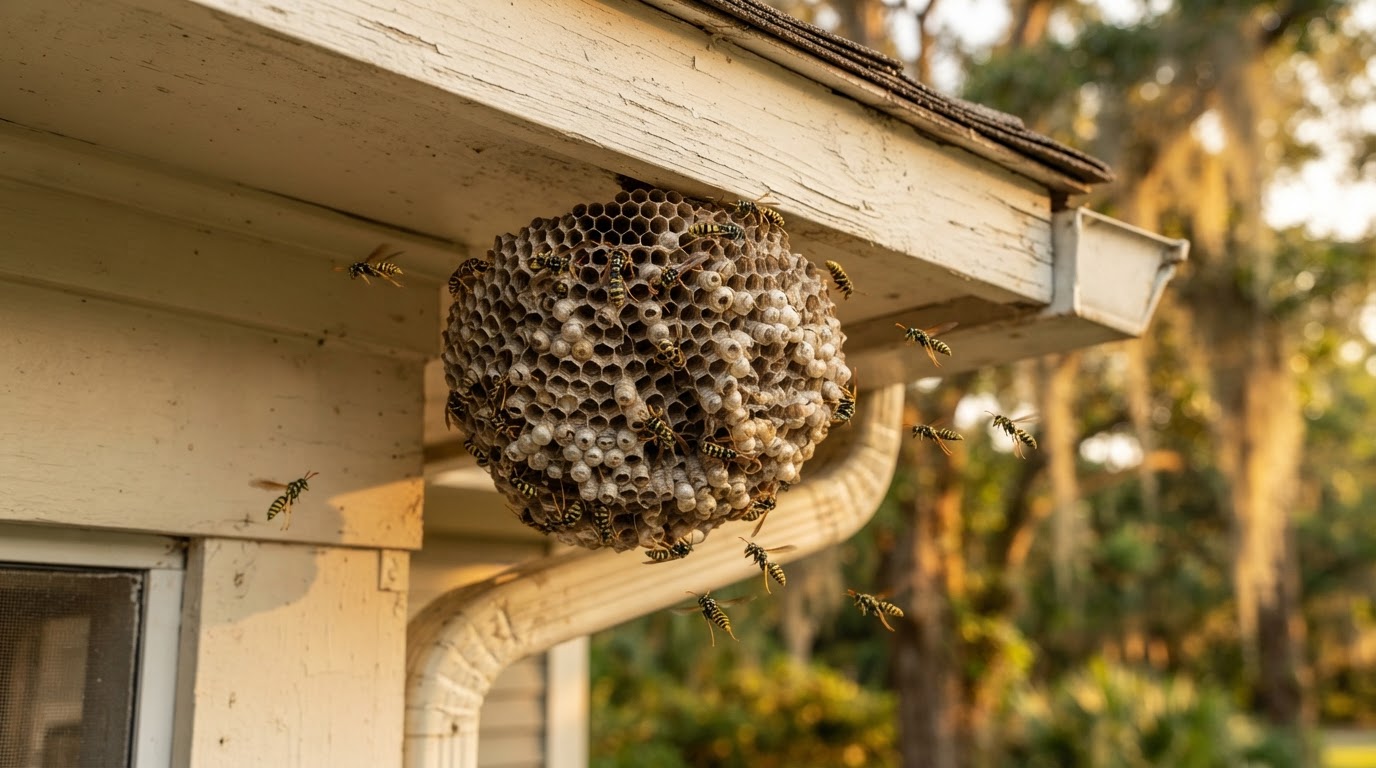
You've probably noticed more wasps buzzing around your porch, under your deck, or near your outdoor furniture this month. Maybe you spotted a paper nest tucked under a soffit or noticed yellow jackets hovering suspiciously close to where your kids play. If it feels like things are ramping up, that's because they are.
August is the peak of stinging insect season in Coastal Georgia — and it's not just about numbers. It's about behavior.
Quick Answers (Key Takeaways)
- Why are wasp and hornet nests worse in August? Colonies reach full maturity by late summer, meaning more insects and far more aggressive defensive behavior when the nest is threatened.
- How many wasps can a mature nest contain? According to UGA Cooperative Extension, nests of social species like European hornets can have around 300 to 400 workers by this point in the season.
- What should I do if I find a nest? Do not disturb it. August colonies are at peak size and highly protective — call a professional for inspection and removal.
- When should I call a professional? If you notice consistent flight patterns in and out of a specific area, see a nest, or have children or pets at risk, schedule a professional assessment right away.
Why August Is Different
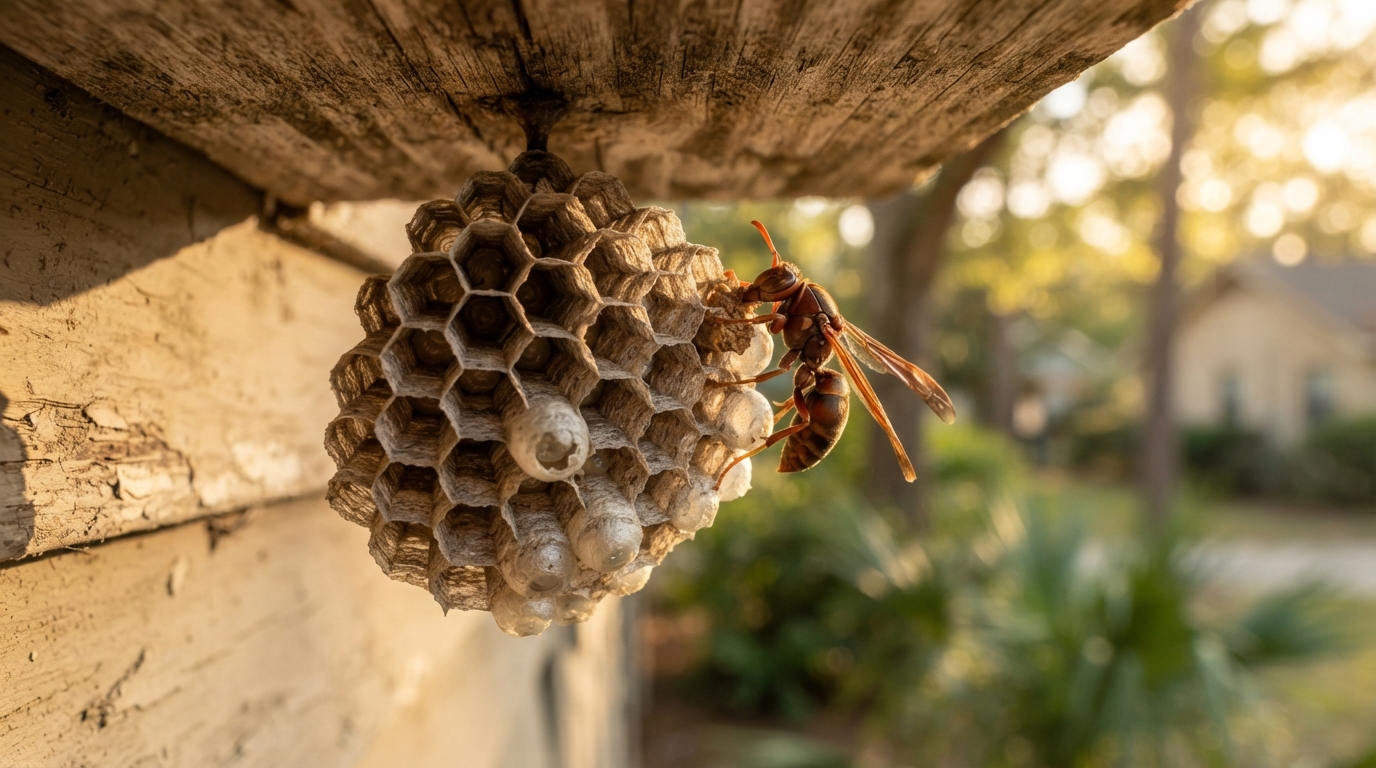
Wasps, hornets, and yellow jackets spend the spring and early summer quietly building their colonies. By late summer, those nests have reached full maturity. According to UGA Cooperative Extension, nests of social species like European hornets can have around 300 to 400 workers by this point in the season — and colonies that large don't take threats lightly.
That's the critical piece most homeowners miss. These insects aren't necessarily aggressive by nature. But UGA Extension notes that social wasps and hornets will attack in large numbers when they perceive their nest is in danger. A lawnmower that gets too close, a curious child poking at something under the eaves, a dog running past a ground-level nest — any of these can trigger a defensive response that's far more intense than a single sting.
In August, the stakes of that moment are at their highest.
What You're Dealing With in Coastal Georgia
Not all stinging insects build the same kind of nests or behave the same way. Knowing what you're looking at matters. If you haven't already, check out our guide to identifying wasps, hornets, and yellow jackets for a detailed breakdown.
Paper wasps are one of the most common sights around Coastal Georgia homes. They build open, umbrella-shaped paper nests — usually under eaves, porch ceilings, deck rails, and outdoor light fixtures. They're generally less aggressive than yellow jackets but will defend their nest firmly if disturbed.
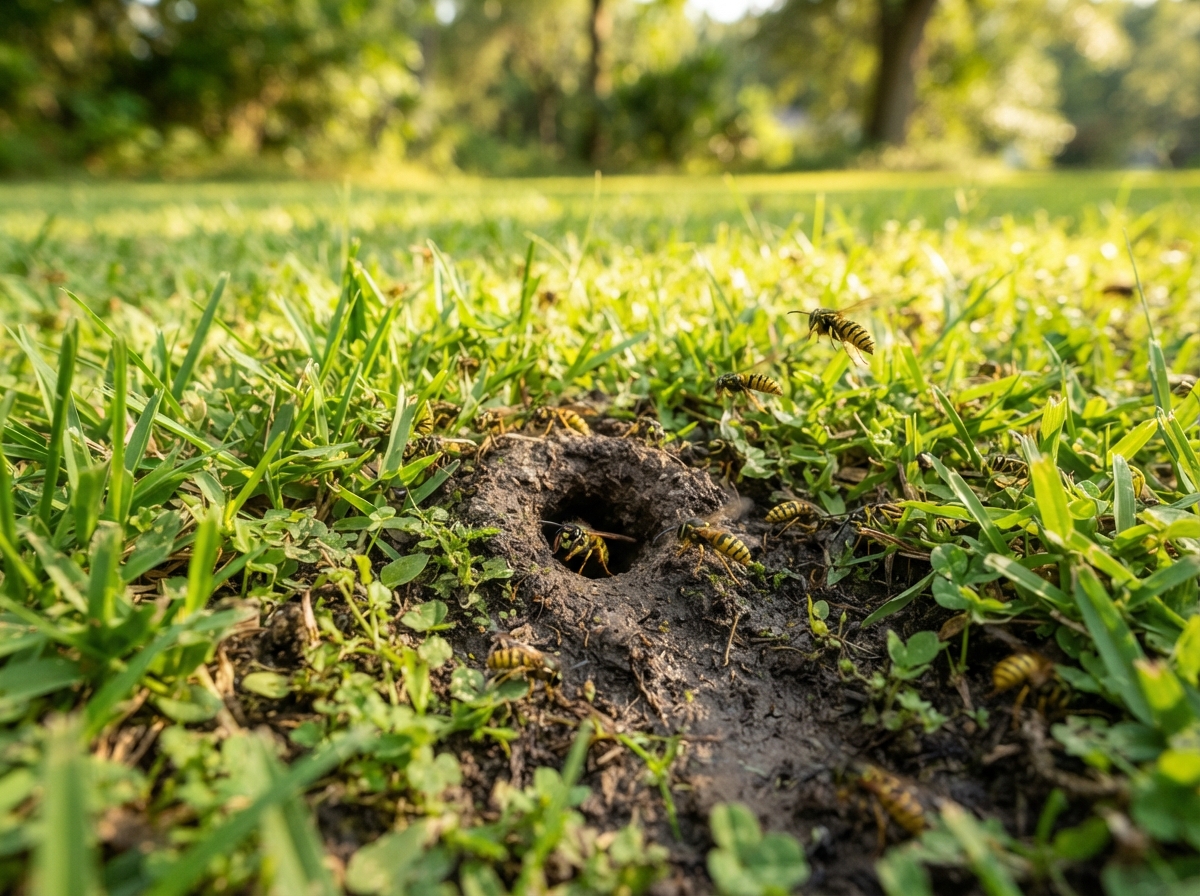
Yellow jackets are a different story. They're often ground-nesters, building large colonies in soil cavities, wall voids, or spaces inside structures. They're highly defensive, quick to respond, and can sting multiple times. Finding a ground nest by accident — while mowing or trimming — is one of the most common ways people get stung badly.
Baldface hornets and European hornets build larger enclosed paper nests, often in shrubs, trees, or structural voids. UGA Extension notes that European hornets are also one of the few wasp species attracted to lights at night, which is why Coastal Georgia homeowners sometimes find them buzzing around porch and deck lighting after dark.
All of these species are at or near peak colony size right now, which means any nest on or near your property is hosting more insects — and more potential defensive response — than at any other point in the year. You can learn more about these species in our Pest Library.
Need Professional Pest Control?
Don't let pests take over your Coastal Georgia home. Get a customized treatment plan today.
The Areas to Watch Around Your Home
Stinging insects build where they find shelter, warmth, and proximity to food. Around most Coastal Georgia homes, that means:
- Under eaves and soffits — one of the most common locations for paper wasp nests
- Deck and patio undersides — sheltered, undisturbed, and close to the family activity they'll defend
- Outdoor furniture and cushion storage — nests can be built quickly in spots that go unnoticed between uses
- Hollow trees, fence posts, and landscape timbers — common entry points for ground-nesting species
- Wall voids and structural gaps — especially in older Coastal Georgia homes where siding and soffits may have gaps around utility penetrations

The challenge is that many of these nests are found by accident — and that moment of discovery is exactly when the risk is highest.
Five Things Homeowners Can Do Right Now
The Homeowner Habits That Matter
These aren't substitutes for professional management, but they're the kind of habits that help you stay aware and support a safer property between service visits.
- Do a perimeter walk early in the morning. Wasps are least active in the early morning hours when temperatures are cooler. That's the safest time to look for nests around your eaves, under deck rails, and along your roofline — from a safe distance.
- Keep outdoor food and drinks covered. Yellow jackets are strongly attracted to sugary drinks, proteins, and garbage. During outdoor meals and gatherings, keep food covered and dispose of trash promptly. This reduces the food signals that draw foragers into your family's space.
- Check around outdoor lighting. Because European hornets are attracted to light at night, check around porch fixtures, string lights, and deck lighting for signs of activity or nesting materials.
- Seal entry points where you can. Gaps in siding, soffits, and around utility lines are open invitations. Sealing those gaps — especially heading into fall — reduces the number of sheltered spots available to nesting insects.
- Give activity a wide berth and call for a professional assessment. If you're noticing consistent flight patterns in and out of a specific area, that's a sign of an active nest nearby. Don't probe the area, spray it yourself, or attempt to knock a nest down. A professional inspection can confirm what you're dealing with, where it is, and what the right removal approach looks like.
Why This Isn't a Wait-and-See Situation
Some homeowners hold off on addressing stinging insect nests, assuming they'll just go away or that they're not really a problem unless someone gets stung. But by August, a nest that's been building all summer isn't going to shrink on its own — it's at or near its largest, most defensive point.
For families with young children, pets that spend time outside, or anyone with a known allergy to stings, a mature nest on the property is a genuine safety concern that deserves a professional look.
Vengeance Pest Solutions' Vengeance® Sting Defense program is designed specifically for this. A licensed technician inspects your property to identify active nests, locate likely nesting areas, and build a targeted treatment plan — not a generic spray-and-go approach, but a plan built around what's actually present at your home.
If you've been noticing increased wasp or hornet activity around your property, August is the time to act. The nests are at their peak — and so is the risk of a close encounter that could have been avoided.
📞 Call or text Vengeance Pest Solutions at 912-268-3150, or book a free evaluation here to schedule your inspection. Targeted. Trusted. Effective.