
Why You Should Never Disturb a Wasp or Hornet Nest on Your Own
And What Vengeance Does Instead
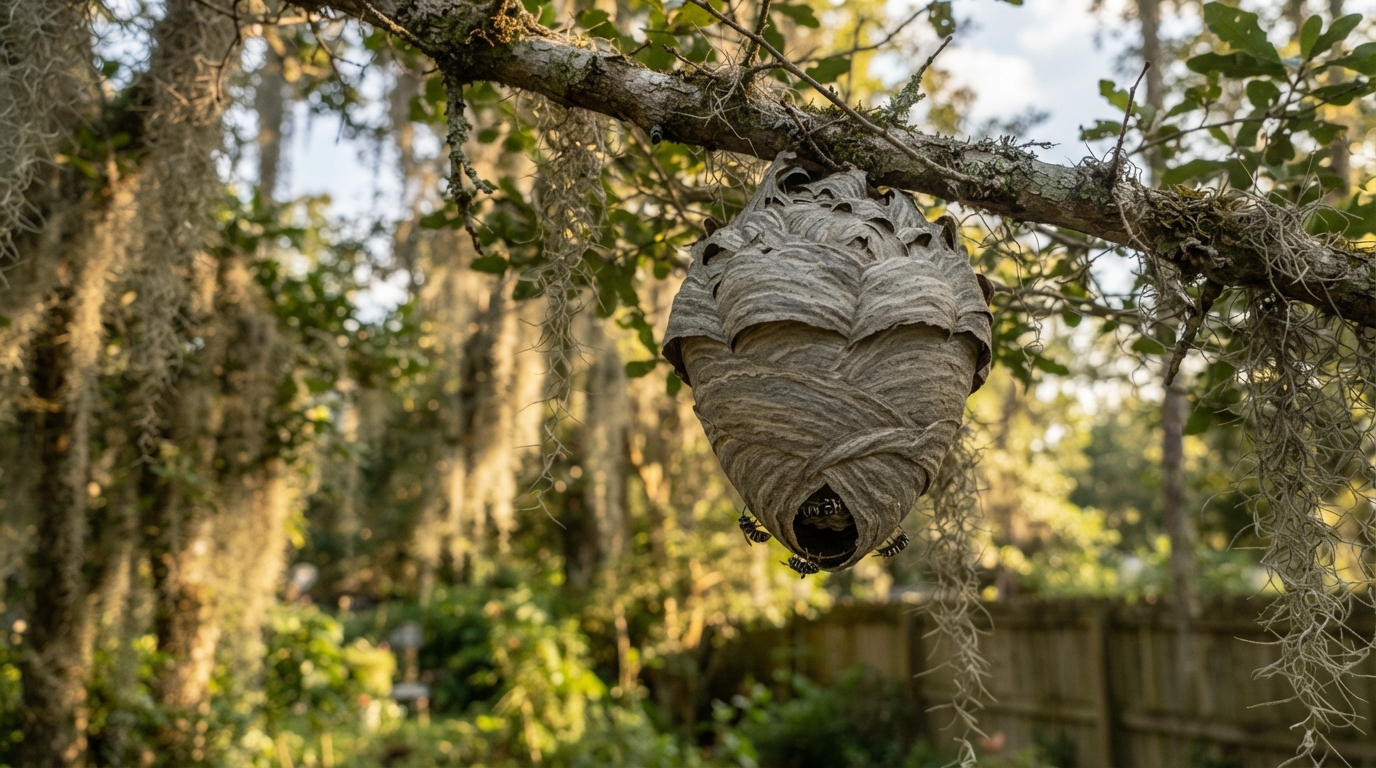
You Found a Nest. Now What?
Maybe you spotted it tucked up in the eave of your porch. Maybe you nearly stepped on a yellow jacket hole in the yard. Maybe the nest is hanging from a tree branch you walk under every morning. Whatever you found, you had the same instinct most homeowners have: I need to deal with this.
That instinct is right. You do need to deal with it. The part worth pausing on is the how.
By August in Coastal Georgia, the wasp and hornet nests on your property are not small. They have been growing since early spring, and right now — in the height of late summer — they are at peak population, peak size, and peak defensive aggression. This is the time of year when a nest that looked manageable two months ago is now housing hundreds or thousands of workers ready to defend it at a moment's notice.
This week, we want to talk about why this is the moment to call in a professional rather than go it alone — and what Vengeance Pest Solutions' approach actually looks like when we handle it with you.
Quick Answers (Key Takeaways)
- Why is August the worst time to disturb a nest? Colonies reach peak size by late summer, meaning hundreds or thousands of defensive workers will respond aggressively to any perceived threat.
- Is it safe to spray or knock down a nest yourself? No. Disturbing a mature nest without proper equipment and training can trigger a mass defensive response resulting in multiple stings.
- What does professional service look like? Vengeance starts with an inspection to identify the species, locate all nests (including hidden ones), and build a targeted treatment plan.
- Why does ongoing service matter? Wasps build new nests every year. Annual service catches new colonies early before they reach dangerous size.
Why Late Summer Is the Most Dangerous Time for Nest Activity
Social bees, wasps, and hornets are a greater stinging threat than solitary pests because they will attack in large numbers if they perceive their nest is in danger. That matters a great deal in August, because the colony has been growing all season.
Yellow jacket colonies are initiated by overwintering queens that make paper nests underground, but occasionally in hollow trees, wall voids, attics, or branches — and a fully developed nest may contain from a few hundred to many thousand adults. Those numbers are at their highest right now.
Unlike solitary wasps, social wasps like paper wasps and bald-faced hornets live in one large colony where groups have designated jobs — and because the whole colony lives in one place, they can be more aggressive and will defend their family unit at all costs.
The practical result: disturbing a mature August nest — even accidentally, even briefly — can trigger a defensive response that puts you, your family, and your pets at serious risk of multiple stings. This isn't about fear. It's about understanding what you're dealing with before deciding how to respond. If you haven't already, our guide to identifying wasps, hornets, and yellow jackets can help you recognize what species is on your property.
Nests You Can See — And Ones You Can't
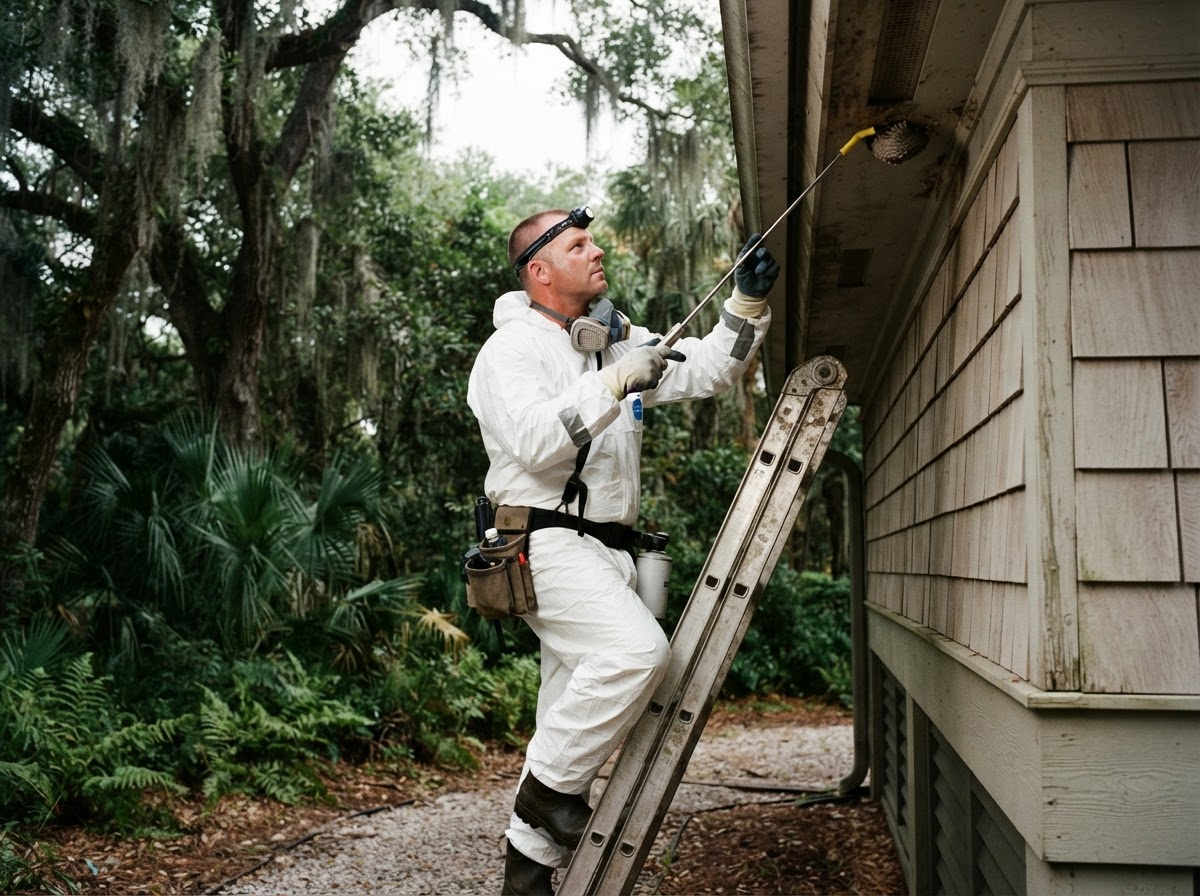
One of the most important things a professional inspection does is locate the nests you don't know about.
The nest you can see — hanging from the porch ceiling or attached to a fence post — is concerning, but at least you know it's there. The ones that cause the most unexpected problems are the ones tucked into:
- Eaves and soffits where workers are slipping in and out through a gap you haven't noticed
- Underground entrances in the lawn or garden that look like an insect hole until you get too close
- Wall voids inside the structure of your home, where a colony can grow hidden for an entire season
- Outbuildings and sheds where low traffic means the nest goes unnoticed until it's large
Yellow jackets and similar species sometimes use hollow trees, wall voids, and attics, which means the activity you're seeing near your roofline or in your yard could indicate a nest location that isn't obvious from the outside. You can learn more about these species in our Pest Library.
Seeing Wasp or Hornet Activity?
From a safe distance, snap a pic and submit it for a FREE ID — we'll tell you what it is and what to do next. Never approach an active nest.
If you can't get a clear photo from a safe distance, don't risk it — book a free appointment and we'll ID it onsite.
A trained technician knows where to look — and importantly, how to approach those locations without triggering a defensive response.
What Professional Service Actually Looks Like
When Vengeance Pest Solutions handles a stinging insect concern, it starts with an inspection — not a guess. The goal is to identify what species is present, where the nests are located (including ones that aren't obvious), and what the right approach is for your specific property.
Our Vengeance® Sting Defense service is designed for exactly this — stinging insects on your property, including wasps and their nests. The service is targeted to what's actually on your home, not a one-size-fits-all spray.
That inspection-first approach matters because different stinging insects behave differently. Yellow jackets feed on a variety of pest insects but will also forage for meat or soft drinks at picnic, camp, and garbage sites — a habit that often brings them into close association with people. Paper wasps behave differently from yellow jackets, and what works for one won't necessarily work for the other. Knowing what you're dealing with shapes everything about how the service is performed.
How Homeowners Can Support That Partnership
The Homeowner Habits That Matter
Professional service handles the nests and the active colonies. Between service visits, there are habits that make your property less attractive to new activity — and these are worth keeping up year-round as part of your ongoing relationship with your pest control provider.
- Keep outdoor trash covered and secured. Good sanitation can help reduce problems with yellow jackets, particularly because they are attracted to food and sugary drinks. Tightly lidded trash cans, especially near outdoor entertaining areas, make your yard less of a foraging destination.
- Be aware of any unusual flying activity around your home. If you start seeing wasps frequently flying in and out of a specific area — a gap in the siding, a spot near the ground, a section of eave — that's worth noting and reporting to your technician. Early awareness helps your provider respond before a small nest becomes a large one.
- Keep food and drinks covered when eating outdoors. Yellow jackets in particular are drawn to open drinks, uncovered food, and anything sweet left outside. This is especially relevant for backyard cookouts and outdoor dining this time of year.
- Resist the urge to disturb any nest or entrance point you find. If you discover what you believe is a nest — on the structure, in the yard, or near an outbuilding — leave it alone and contact your pest control provider. Solitary scavenging yellow jackets are usually non-aggressive unless handled, but become very aggressive as a group if their nest is threatened. Poking, spraying, or attempting to knock down a mature nest without professional service is the fastest way to make a manageable situation dangerous.
- Note activity at entry points before your scheduled visit. A quick mental note — or even a photo — of where you're seeing flying activity helps your technician zero in on the right locations faster and gives them the most complete picture of what's happening on your property.
These habits are not a substitute for professional service. They're the things that work alongside it, helping your Vengeance technician get the most out of every visit and keeping your property as inhospitable to stinging insects as possible between appointments.
The Honest Reason Ongoing Service Matters Here
Wasps and hornets are not a once-and-done pest problem. Colonies form anew each year. A new nest is made each year, initiated by a fertilized overwintering queen. That means the nest you dealt with last fall doesn't protect you from a new colony forming in the same or nearby location this spring. Ongoing professional service creates a consistent layer of awareness and protection — so that new activity is caught early, nests are addressed before they reach maximum size, and you're not facing an August emergency every single year.
If you've been thinking about it, August is exactly the right time to schedule. Nests are at peak size now, and the sooner they're addressed, the safer your yard, your porch, and your family will be through the rest of the season. Learn more about why wasp and hornet nests are at their worst in August.
Ready to Get Vengeance on Your Wasp Problem?
Vengeance Pest Solutions offers a free, no-obligation inspection for homeowners in Glynn, Camden, McIntosh, and Brantley counties. A licensed technician will assess your property — inside and out — and walk you through exactly what's going on and what needs to be done.
Call or text us at 912-268-3150, or book a free evaluation here to schedule your inspection. Targeted. Trusted. Effective.